Email Us
News
Products

What Is the Difference Between Standard and Heavy Duty Trailer Axles?

2026-11-25 0 Leave me a message

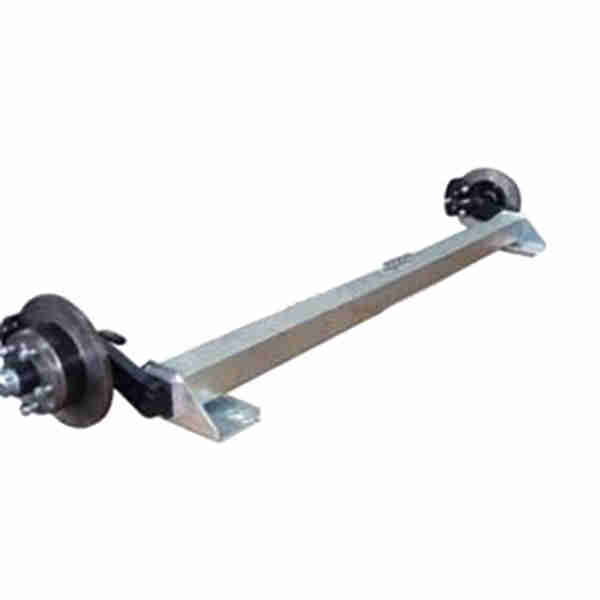
At a busy distribution yard, a procurement manager compares two quotes for the same flatbed trailer. The price gap looks small, but the specification sheets tell a different story: one axle is listed as standard, the other as heavy duty. The real decision is not about a label; it is about payload, route severity, maintenance intervals, and the safety margin the fleet needs during peak season. The question is straightforward: What Is the Difference Between Standard and Heavy Duty Trailer Axles? In practical terms, standard axles are engineered for predictable loads and moderate duty cycles, while heavy duty axles use stronger tubes, larger spindles, higher-capacity bearings, and more robust brakes to absorb higher loads, shock, and frequent stops. For buyers, the difference shows up in the axle beam wall thickness, bearing class, brake size, suspension compatibility, and the cost per mile over the trailer’s service life. A low upfront price can be misleading if the axle is undersized for a route with curbs, docks, and uneven pavement. Raydafon Technology Group Co.,Limited supports procurement teams with application reviews, load calculations, and custom axle specifications so the choice is based on duty cycle rather than guesswork. This guide breaks down the technical and commercial differences, with tables and buying checks that help you specify the right axle for your fleet.


Heavy Duty Trailer Axles

The Core Difference in Daily Fleet Use

Pain point scene: A regional fleet hauls building materials on routes that mix highway miles, tight dock turns, and rough access roads. The trailer was specified with standard axles because the catalog load figure looked acceptable, but drivers report regular curb strikes and uneven pavement. Maintenance begins to rise, tire wear becomes uneven, and the procurement team faces unplanned downtime during a peak delivery week.

Solution: Match the axle class to the actual duty cycle, not only to the trailer’s nominal capacity. Standard axles suit lighter trailers with stable routes and moderate loads. Heavy duty axles add beam strength, spindle stiffness, bearing capacity, and brake thermal margin for higher loads and tougher operating conditions. Raydafon Technology Group Co.,Limited reviews GAWR, route profile, tire size, and suspension layout so buyers can avoid over-specification and under-specification.

Table 1: Standard vs. heavy duty axle procurement parameters

ParameterStandard Trailer AxleHeavy Duty Trailer AxleBuyer Check
Typical capacity3,500–7,000 lb per axle8,000–16,000 lb per axleConfirm GAWR and tire rating, not only trailer total
Beam tube3 in OD, 0.25 in wall5 in OD, 0.375–0.5 in wallCheck steel grade and wall thickness
Spindle1.5–1.75 in class2.25 in class or largerVerify bearing inner diameter and seal fit
Brake package10–12 in class12.25–16.5 in classMatch brake size to route stops and load
Duty cycleLocal, light, predictableRegional, heavy, high-cycleMap route severity and seasonal peaks

Load Ratings and Real-World Scenarios

Pain point scene: A buyer compares two axles by load number alone and selects the lower-cost option. Later, the trailer runs near its limit on rough roads and in stop-and-go traffic. The axle may pass a static load check, but dynamic forces from braking, potholes, and dock ramps reduce the safety margin. Bearings run hotter, brake linings wear faster, and the fleet absorbs repeat repairs.

Solution: Use load rating as a starting point and add a service factor for route severity, braking frequency, and seasonal overload risk. For procurement, the safest approach is to compare capacity, beam stiffness, brake thermal mass, and bearing class together. Raydafon Technology Group Co.,Limited helps buyers translate route data into a practical axle specification and a clear bill of materials.

Table 2: Scenario-based axle selection

Operating ScenarioRecommended ClassKey SpecificationRisk If Undersized
Urban parcel trailer, 5,000 lb loadStandard, 7,000 lb class3 in beam, standard brake packageFaster brake fade in stop-and-go use
Regional flatbed, 12,000 lb loadHeavy duty, 12,000–16,000 lb class5 in beam, larger spindle and bearingsBeam fatigue and bearing heat
Construction tandem, 20,000 lb totalHeavy duty, 16,000 lb per axleHigh-capacity brake and reinforced tubeUneven tire wear and downtime
Coastal logistics, mixed loadHeavy duty with corrosion protectionCoated finish and sealed bearingsCorrosion fatigue and seal failure

Construction Details That Matter

Pain point scene: Two axles look similar on a warehouse floor. One has a thicker tube, a larger spindle, and a heavier brake package; the other uses lighter components that meet a lower duty cycle. Without a specification review, a buyer may compare only mounting dimensions and miss the features that control service life.

Solution: Ask for the construction details that affect fatigue, heat, and fit: beam wall thickness, spindle profile, bearing class, weld quality, brake size, and finish. Raydafon Technology Group Co.,Limited supports OEM and aftermarket buyers with axle configurations that match suspension, hub, brake, and wheel-end requirements.

Table 3: Construction features and procurement questions

FeatureStandard AxleHeavy Duty AxleQuestion to Ask
Axle beamLighter tube for moderate loadsThicker wall and larger sectionWhat is the steel grade and wall thickness?
SpindleStandard bearing classLarger spindle and bearing classWhat bearing series and seal are used?
BrakeSmaller brake for light dutyLarger brake for heat marginWhat lining and drum size match the route?
Welding and finishStandard production finishReinforced welds and protective coatingIs corrosion protection suitable for the region?

Choosing the Right Axle for Your Fleet

Pain point scene: A mixed fleet buys one axle specification for every trailer to simplify inventory. Light routes carry extra weight and cost, while heavy routes run the lighter axle near its limit. The result is a purchasing compromise that creates maintenance variation across the fleet.

Solution: Segment the fleet by route, load, and braking cycle. Use standard axles where loads are stable and routes are moderate; use heavy duty axles where payload, shock, or stop frequency is high. Raydafon Technology Group Co.,Limited can review fleet data and propose a small number of axle configurations that cover the real operating profiles without unnecessary complexity.

Table 4: Decision checklist for fleet buyers

Decision FactorChoose Standard WhenChoose Heavy Duty WhenData to Collect
PayloadLoads stay well below GAWRLoads approach or reach higher GAWRScale tickets and seasonal peaks
RoutePaved, predictable, low shockDocks, curbs, rough pavement, hillsRoute profile and driver reports
BrakingLong highway intervalsFrequent stops and high heatStop frequency and brake service history
InventoryOne light-duty fleet profileMultiple severe-duty profilesTrailer models and suspension types

Maintenance and Cost of Ownership

Pain point scene: The lowest purchase price can hide higher costs in bearings, brake linings, tires, and downtime. A standard axle that is overloaded may require more frequent service, while a heavy duty axle that is oversized for a light route adds unnecessary weight and cost.

Solution: Compare total cost of ownership across the service life: purchase price, brake life, bearing service, tire wear, downtime, and resale value. Raydafon Technology Group Co.,Limited helps buyers evaluate these cost drivers and select an axle that protects uptime without overpaying for capacity the fleet does not need.

Table 5: Cost-of-ownership comparison

Cost ItemStandard AxleHeavy Duty AxleTCO Note
Initial purchaseLowerHigherCompare against duty cycle, not price alone
Brake serviceShorter interval under heavy stopsLonger thermal marginTrack lining life by route
Bearing and sealStandard service intervalHigher-capacity componentsConfirm seal quality for wet or coastal use
DowntimeCan rise if overloadedLower risk in severe dutyInclude peak-season downtime cost

Buyer Questions About Standard and Heavy Duty Trailer Axles

What Is the Difference Between Standard and Heavy Duty Trailer Axles for a Mixed Fleet?

For a mixed fleet, the difference is best managed by route segmentation. Standard axles fit light, predictable routes with moderate loads. Heavy duty axles fit higher payloads, rough pavement, frequent braking, and high-cycle operation. A procurement team can use GAWR, route severity, and brake service history to assign each trailer to the right class instead of buying one specification for every route.

How Does Raydafon Technology Group Co.,Limited Help Buyers Choose Between Standard and Heavy Duty Trailer Axles?

Raydafon Technology Group Co.,Limited reviews the trailer application, load profile, suspension layout, wheel-end requirements, and regional operating conditions. The team then proposes axle specifications, brake configurations, and mounting details that match the duty cycle. Buyers receive a clear specification sheet for comparison, which reduces the risk of undersized axles, unnecessary over-specification, and fitment problems at assembly.

About Raydafon Technology Group Co.,Limited

Raydafon Technology Group Co.,Limited works with trailer builders, distributors, and fleet buyers who need axle specifications that match real routes rather than catalog averages. From standard trailer axles for light and medium duty trailers to heavy duty trailer axles for high-load, high-cycle operations, the company provides engineering review, custom mounting and brake configurations, and production support through https://www.raydafon-motor.com. Share your GAWR, tire size, suspension layout, and operating profile with the team at [email protected] to receive a practical axle recommendation and a clear specification sheet for your next order.


Research References

J. C. Brown, R. S. Sharpe (2018). Fatigue life assessment of heavy-duty trailer axle beams under variable amplitude loading. International Journal of Fatigue, 112, 123–135.

M. A. Rahman, L. Zhang (2020). Lightweight design of commercial vehicle axles using high-strength steel. Thin-Walled Structures, 150, 106678.

S. K. Patel, D. Miller (2017). Comparative study of standard and heavy-duty axle housings for freight trailers. SAE International Journal of Commercial Vehicles, 10(2), 245–257.

H. Nakamura, T. Ito (2019). Bearing selection and spindle optimization for heavy-duty trailer axles. Proceedings of the Institution of Mechanical Engineers, Part D: Journal of Automobile Engineering, 233(14), 3721–3734.

P. Garcia, E. Martinez (2021). Brake thermal performance in heavy-duty trailer axle systems. Vehicle System Dynamics, 59(8), 1189–1207.

A. K. Sharma, V. Kumar (2016). Structural integrity of welded axle tubes under bending fatigue. Engineering Failure Analysis, 68, 45–58.

R. T. Williams, J. Lee (2022). Total cost of ownership for standard versus heavy-duty trailer axle configurations. Transportation Research Record, 2676(4), 321–334.

L. Chen, Y. Wang (2018). Corrosion fatigue of trailer axle materials in coastal logistics operations. Materials & Design, 156, 210–221.

D. P. Singh, M. Rossi (2020). Load-sharing analysis of multi-axle trailer suspensions. International Journal of Heavy Vehicle Systems, 27(3), 289–306.

K. Müller, F. Weber (2019). Finite element optimization of heavy-duty axle spindles for European freight trailers. Journal of Strain Analysis for Engineering Design, 54(5), 301–315.

Related News
Leave me a message
Mobile
+8613083988828
Address
Luotuo Industrial Area, Zhenhai District, Ningbo City, China
X
We use cookies to offer you a better browsing experience, analyze site traffic and personalize content. By using this site, you agree to our use of cookies. Privacy Policy
RejectAccept