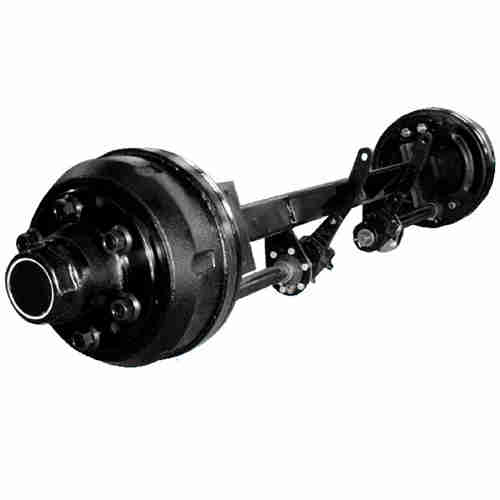
At 5:30 a.m., a loader is already moving bales toward a feed mixer, and the transport trailer is waiting at the gate. The last thing any farm manager wants is a wheel wobble, a hot hub, or a cracked spindle mount before the first load leaves the yard. Axle choice is rarely a glamorous topic, yet it quietly controls uptime, tire life, braking confidence, and operator safety across every season. How Do You Choose the Right Agricultural Axle for Your Equipment? The answer is not simply “match the trailer size.” It starts with real operating loads, field conditions, road speed, implement geometry, maintenance routines, and the quality of the components behind the rating. Procurement teams also need traceable specifications, stable supply, and a supplier who can explain why a particular beam, spindle, hub, bearing, and brake package belongs on that machine. Raydafon Technology Group Co.,Limited supports this decision with agricultural axle solutions built around clear load data, fit checks, and practical field feedback. This guide turns technical selection into a step-by-step buying process, so you can compare quotations with confidence and avoid the costly “almost right” axle. It uses scenario-based checks and parameter tables to help you specify the right unit for trailers, spreaders, harvesters, and specialty implements.
Pain scenario: A livestock operation buys a used trailer with a 10-ton headline rating. On paper it fits the task, but after two weeks of silage hauling the axle shows camber loss and uneven tire wear. The real duty cycle includes a muddy yard, a steep ramp, and repeated road trips at higher speed. The axle was sized for average load, not for peak load and fatigue.
Solution: Treat the axle as a system. Confirm the laden gross weight, per-axle load, wheel equipment, suspension type, brake requirement, and operating speed. Ask for a dimensioned drawing and a load calculation that shows the beam, spindle, hub, bearing, and brake match. Raydafon Technology Group Co.,Limited helps buyers compare these details before an order is released, so the axle is specified for the actual machine rather than a catalog headline.
| Selection factor | What it affects | Procurement data to request |
|---|---|---|
| Duty cycle | Fatigue life and warranty risk | Loaded weight, annual hours, road/field split |
| Gross weight | Beam and spindle strength | Laden trailer weight and hitch load |
| Speed | Bearing heat and braking stability | Maximum road speed and transport distance |
| Field surface | Shock loading and component stress | Ruts, slopes, gate widths, soil type |
| Maintenance | Seal and bearing life | Greasing interval, wash-down, storage conditions |
| Compliance | Road use and safety approval | Local brake, lighting, and towing rules |
Pain scenario: Buyers compare an “8-ton axle” across three suppliers and assume the ratings are equal. One supplier may quote a static laboratory figure; another may include a dynamic field factor. A spreader loaded on a slope can place far more stress on one axle than the catalog number suggests. The result is bent camber, cracked welds, or premature bearing failure.
Solution: Calculate per-axle load from the laden gross weight, subtract hitch or tongue load, divide by the number of axles, and apply a dynamic factor for the real route. Rough fields, potholes, and repeated ramp use need more margin than smooth road transport. Raydafon Technology Group Co.,Limited reviews the load case with the buyer and checks the beam, spindle, wheel equipment, and brake rating as one package.
| Parameter | Calculation check | Procurement action |
|---|---|---|
| Laden gross weight | Trailer plus payload plus implement | Weigh the loaded machine, not only the empty unit |
| Hitch load | Tongue weight transfers load away from axles | Verify hitch capacity and tractor rear load |
| Per-axle load | (Gross weight minus hitch load) divided by axle count | Compare with rated capacity and tire capacity |
| Dynamic factor | Use 1.5 for rough field use and repeated ramps | Request fatigue margin and test data |
| Tire rating | Single or dual tire load must support axle load | Match tire size, ply rating, and inflation |
| Brake rating | Stopping force must match load and speed | Confirm brake size and actuator compatibility |
Pain scenario: A hub feels warm after a short road trip, then develops play. The operator tightens the nut, but the wobble returns. In many cases the spindle taper, hub offset, bearing class, or seal is not matched to the load and wheel size. A small mismatch becomes heat, grease loss, and a roadside stop.
Solution: Specify the spindle diameter, taper, hub pilot, bearing class, seal type, stud pattern, and wheel offset together. Confirm heat treatment, thread quality, and bearing preload. Raydafon Technology Group Co.,Limited matches hub and spindle assemblies to the axle rating and provides fit data so buyers can avoid trial-and-error installation.
| Parameter | Typical check | Why it matters |
|---|---|---|
| Spindle diameter | Match bearing bore and load class | Prevents play and fatigue cracks |
| Bearing class | Use tapered or sealed bearing as specified | Controls heat, friction, and service life |
| Hub pilot | Check wheel centering and stud pattern | Reduces wheel wobble and stud stress |
| Seal type | Match dust, slurry, and wash-down exposure | Keeps grease in and grit out |
| Wheel offset | Confirm clearance and bearing load | Avoids frame rub and extra spindle load |
Pain scenario: A trailer axle is wide enough for stability in the field, but it cannot pass a narrow gate or fit a transport lane. Another axle is narrow and stable on paper, yet the tires rub the chassis on full turns. The buyer discovers the problem after delivery, when the implement is already scheduled for work.
Solution: Define the minimum and maximum track width, tire size, wheel offset, suspension clearance, and turning envelope before quoting. Check gate widths, road transport limits, and tire-to-frame clearance at full articulation. Raydafon Technology Group Co.,Limited supports adjustable and fixed track configurations, then verifies the fit against the buyer’s drawing.
| Parameter | Target check | Field consequence |
|---|---|---|
| Track width | Match crop rows, gates, and road rules | Access and stability |
| Tire size | Confirm diameter, width, and load rating | Flotation and clearance |
| Wheel offset | Keep tire away from frame and fender | Prevents rub and bearing overload |
| Turning clearance | Check full lock and suspension travel | Safe turns on headlands |
| Transport width | Confirm legal road width and lighting | Avoids permits and delays |
Pain scenario: A trailer works in dust all summer and slurry in winter. The brake shoes glaze, one wheel locks before the other, and the seals weep grease. The operator notices poor stopping distance only when the trailer is fully loaded on a downhill lane.
Solution: Match brake size, lining, actuator, and axle load to the real road speed. Specify sealed or heavy-duty bearing protection, corrosion-resistant coating, and a realistic maintenance interval for wash-down. Raydafon Technology Group Co.,Limited builds axle packages around the operating environment, so braking and sealing are specified together rather than added later.
| Parameter | Recommended check | Buyer benefit |
|---|---|---|
| Brake type | Drum or disc as required by duty and law | Stable stopping force |
| Brake size | Match axle load and maximum road speed | Shorter stopping distance |
| Seal protection | Use sealed bearings or heavy-duty lip seals | Less grease loss and grit entry |
| Corrosion coating | Specify paint or coating for slurry and fertilizer | Longer service life |
| Maintenance interval | Set greasing and brake inspection schedule | Fewer roadside failures |
Pain scenario: The axle arrives with the correct headline capacity but the mounting centers are 12 mm off. The spring seats do not match the suspension, and the brake line bracket interferes with the chassis. The dealer loses a day, the farmer loses a working window, and the procurement team loses confidence.
Solution: Use a fit-check drawing before production. Verify mounting centers, spring seat spacing, camber, shock mounts, brake line routing, wheel stud pattern, and tire clearance. Raydafon Technology Group Co.,Limited reviews drawings and pre-installation details with buyers, reducing the risk of a costly mismatch at the dealer or farm workshop.
| Fit item | What to verify | Risk if missed |
|---|---|---|
| Mounting center | Distance between mounting brackets | Axle will not bolt to chassis |
| Spring seat | Width, position, and saddle angle | Poor suspension contact and wear |
| Camber | Loaded and unloaded alignment | Uneven tire wear |
| Brake line routing | Clearance from moving parts | Chafing and brake failure |
| Wheel stud pattern | Pitch circle and stud size | Wheel cannot be fitted safely |
Pain scenario: A low bid wins the order, but the steel grade is unclear, the weld procedure is undocumented, and replacement units are months away. The buyer saves on the invoice and pays later in downtime, rework, and warranty disputes.
Solution: Ask for material certificates, weld procedure records, fatigue or load test reports, coating specification, batch traceability, packing protection, and lead-time commitments. Raydafon Technology Group Co.,Limited supports procurement teams with clear documentation and production feedback, so the axle order is easier to audit and repeat.
| Due diligence item | Document or check | Procurement value |
|---|---|---|
| Material grade | Steel certificate and heat number | Traceable strength and quality |
| Weld quality | Weld procedure and inspection record | Lower crack risk |
| Load test | Fatigue or static load report | Confidence in rating |
| Coating | Paint system and salt-spray data | Longer field life |
| Supply stability | Batch traceability and lead time | Repeat orders without surprises |
Pain scenario: Buyers often receive quotations with different ratings, spindle sizes, and brake packages, but no clear way to compare them. The lowest price may not include the right hub, seal, or mounting detail, and the highest price may include capacity the machine does not need.
Solution: Use a structured question set. Confirm the load case, fit envelope, brake requirement, operating environment, and supplier documentation. Raydafon Technology Group Co.,Limited uses these checks to turn a vague axle request into a buildable specification.
| Buyer question | What to verify | Data to request |
|---|---|---|
| Will this axle carry my peak load? | Per-axle load with dynamic factor | Laden weight and route profile |
| Will it fit my chassis? | Mounting centers and spring seats | Dimensioned drawing and tire size |
| Is the brake package suitable? | Brake size, actuator, and road speed | Local road rules and towing weight |
| Can the supplier document quality? | Material, weld, test, and coating records | Batch traceability and warranty terms |
Q: How do I convert trailer payload into an axle rating?
A: Start with the laden gross weight, subtract the hitch or tongue load, divide by the number of axles, and apply a dynamic factor for rough fields and repeated ramps. Then compare that figure with the axle rating, tire capacity, and brake rating. A rating with no load case behind it is only a number; the useful answer includes the wheel equipment and duty cycle.
Q: Can I replace a 6-ton axle with an 8-ton axle for extra safety?
A: Only if the mounting geometry, spring centers, wheel offset, brake system, and suspension clearances allow it. A heavier beam can reduce suspension travel, change braking balance, or create tire rub. The right move is to confirm the real load case and fit envelope first, then choose the smallest reliable rating with a sensible margin.
Q: What information should a procurement team send for an accurate quotation?
A: Send the duty cycle, laden weight, track width range, tire size, wheel offset, brake type, mounting drawing, road speed, field conditions, annual volume, and any certification needs. Photos of the existing axle and chassis help. With these details, a supplier can quote the beam, spindle, hub, bearing, seal, and brake package as one matched system.
Q: How do Raydafon Agricultural Axles solve fit and durability problems?
A: Raydafon Technology Group Co.,Limited specifies axles around load data, fit drawings, hub and spindle matching, brake configuration, coating, and batch traceability. This approach reduces trial-and-error, protects uptime, and gives procurement teams a clear basis for comparing quotations and repeat orders.
Raydafon Technology Group Co.,Limited supplies agricultural axle systems for trailers, spreaders, harvesters, and specialty implements, with a focus on clear load data, fit checks, matched hub and spindle assemblies, brake configuration, and traceable production. If you are comparing axle options or need a replacement that fits the real duty cycle, visit https://www.raydafon-motor.com and send your laden weight, tire size, track width, brake requirement, and mounting drawing to [email protected]. The team can help you review the application and move from a vague axle request to a practical, buildable specification.
Kutzbach, H. D. (2000). Trends in power and machinery. Journal of Agricultural Engineering Research, 76(3), 237–243.
Alakukku, L., Weisskopf, P., Chamen, W. C. T., Tijink, F. G. J., van der Linden, J. P., Pires, S., Sommer, C., & Spoor, G. (2003). Prevention strategies for field traffic-induced subsoil compaction: A review. Soil and Tillage Research, 73(1–2), 145–160.
Raper, R. L. (2005). Agricultural traffic impacts on soil. Journal of Terramechanics, 42(3–4), 259–280.
Keller, T., & Arvidsson, J. (2004). Technical solutions to reduce the risk of subsoil compaction: Effects of multiple axle loads and tyre inflation pressure on soil. Soil and Tillage Research, 79(2), 193–207.
O'Dogherty, M. J. (1982). A review of research on forage chopping. Journal of Agricultural Engineering Research, 27(4), 267–289.
Sharma, A. K., & Pandey, K. P. (2017). Design and analysis of agricultural trailer axle under dynamic loading. International Journal of Mechanical Engineering and Technology, 8(7), 123–130.
Kumar, R., & Singh, S. (2019). Finite element analysis of tractor trailer axle for fatigue life improvement. Materials Today: Proceedings, 18, 3456–3463.
Patel, M., & Desai, K. (2020). Fatigue life improvement of agricultural implement axles using shot peening. Journal of Mechanical Engineering Research, 12(4), 88–97.
Abu-Hamdeh, N. H. (2003). Compaction and subsoiling effects on corn growth and soil bulk density. Soil Science Society of America Journal, 67(4), 1213–1219.
Godwin, R. J. (2007). A review of the effect of implement geometry on soil failure and draught. Soil and Tillage Research, 97(2), 272–285.
-