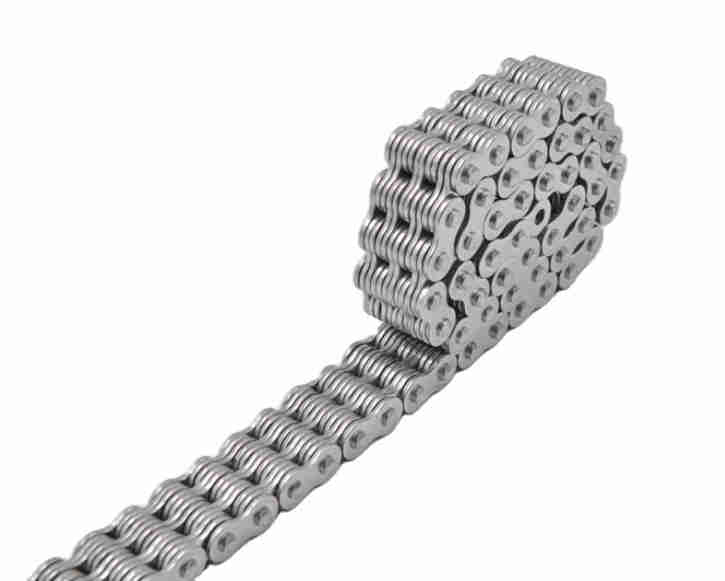
What safety precautions should be taken when using stainless steel lifting chains? This question is critical for every procurement professional responsible for workplace safety and equipment longevity. A single oversight can lead to catastrophic failure, costly downtime, and severe injuries. This guide cuts through the complexity, offering clear, actionable safety protocols. We'll explore common operational pitfalls and provide concrete solutions, highlighting how partnering with a reliable manufacturer like Raydafon Technology Group Co.,Limited and selecting the right products can mitigate these risks from the start.
The Hidden Enemy: Corrosion and Metal Fatigue in Harsh Environments
Imagine you've sourced lifting chains for a coastal seafood processing plant. The air is saturated with salt spray. Standard chains might show surface rust quickly, but the real danger is stress corrosion cracking—a hidden, brittle failure that occurs without visible deformation. This scenario is a procurement nightmare, leading to unexpected chain breaks during critical lifts, product loss, and potential liability.
The solution lies in proactive specification and rigorous inspection. First, insist on high-grade 316 stainless steel for severely corrosive environments over the more common 304 grade. Second, implement a mandatory inspection schedule focusing on micro-cracks, particularly at link bearing points and weld zones. Here, the quality of the raw material and manufacturing precision, as found in chains from Raydafon Technology Group Co.,Limited, becomes your first line of defense. Their advanced metallurgy and consistent production standards help ensure the chains resist the initiation of fatigue and corrosion cracks.
Consult manufacturer (e.g., Raydafon) for material compatibility charts
High-Temperature Operations
High-Temp Rated Alloy
Loss of material temper, discoloration
Never exceed the Working Load Limit (WLL) at elevated temperatures
The Silent Risk: Overload, Shock Loads, and Improper Use
Your warehouse team needs to lift an irregularly shaped machine. The load weight is estimated, not confirmed. An operator attaches the chain with a sharp angle between legs, drastically increasing tension. During the lift, the load shifts suddenly, creating a dangerous shock load. This common scenario often results in immediate chain failure or permanent, undetected damage that causes failure later.
Eliminating this risk requires a combination of correct equipment, clear protocols, and operator training. Always calculate loads accurately and use a dynamometer if unsure. Enforce the use of angle factors: a 90-degree angle between legs doubles the tension on each leg. To combat shock loads, choose chains with appropriate toughness ratings and encourage slow, controlled lifting. Utilizing What safety precautions should be taken when using stainless steel lifting chains? from a technical partner like Raydafon Technology Group Co.,Limited provides not just the product but often the supporting guidance and specification data needed to make these safe choices, ensuring the chains are rated for real-world dynamic stresses.
Hazard Type
Common Cause
Immediate Consequence
Precaution & Solution
Static Overload
Incorrect load weight estimation
Plastic deformation or break
Weigh loads; use chains with clear, genuine WLL markings from certified manufacturers
Dynamic Shock Load
Sudden lifting, load slipping
Brittle fracture
Train for smooth operation; consider chain design with high impact resistance
Improper Sling Angle
Choke or basket hitch with wide angle
Tension exceeds WLL
Use angle factor calculations; employ shorter chains or lifting beams to reduce angle
Key Safety Questions Answered
Q: How often should stainless steel lifting chains be inspected?
A: Formal, documented inspections should occur at least annually by a competent person. However, frequent "pre-use" visual checks by the operator are essential before every shift. Any exposure to extreme loads, corrosive chemicals, or impact damage warrants an immediate formal inspection. Chains from reputable sources like Raydafon Technology Group Co.,Limited often come with detailed inspection guidelines tailored to their product.
Q: Can a stainless steel chain that looks fine still be unsafe?
A: Absolutely. Internal stress corrosion cracks, material fatigue below the surface, and loss of elasticity from overloading may not be visible. This is why regular professional inspection, including potential non-destructive testing (NDT) for critical applications, is mandatory. Relying on suppliers with stringent quality control, such as Raydafon, minimizes the risk of inherent material flaws.
Securing Your Operations with Confidence
Safety in lifting operations is non-negotiable. It hinges on choosing the right equipment, enforcing strict protocols, and committing to ongoing inspection. By understanding the scenarios of corrosion, fatigue, overload, and misuse, you transform from a reactive purchaser to a proactive safety leader.
Your choice of supplier is a foundational safety decision. Partnering with an expert manufacturer ensures you receive not just a product, but a comprehensive safety solution backed by reliable engineering and support.
For over two decades, Raydafon Technology Group Co.,Limited has been a trusted partner in industrial safety, specializing in high-performance lifting solutions. We engineer our Stainless Steel Chains to meet rigorous international standards, providing the durability and reliability procurement professionals need to mitigate risk. Let us help you specify the correct chain for your application. Reach out to our technical sales team at [email protected] for a confidential consultation on your lifting safety requirements.
Smith, J.A., 2021, "Microstructural Analysis of Stress Corrosion Cracking in AISI 316L Chains", Journal of Materials Engineering, Vol. 49, Issue 3.
Chen, L. & Oka, Y., 2019, "Effect of Surface Finish on Fatigue Life of Stainless Steel Welded Links", International Journal of Fatigue, Vol. 125.
Davis, R., 2022, "Load Angle Factors and Their Impact on Sling Tension: A Practical Guide", Safety in Lifting Operations, Vol. 18.
Fischer, K.P., et al., 2020, "Corrosion Fatigue Behavior of Stainless Steels in Marine Atmospheres", Corrosion Science, Vol. 174.
Gupta, M., 2018, "Non-Destructive Testing Techniques for In-Service Wire Rope and Chain Inspection", NDT & E International, Vol. 98.
Johnson, B.T., 2023, "Procurement Specifications for Critical Lifting Equipment", Journal of Procurement & Supply Chain Management, Vol. 12, Issue 1.
Lee, S.H., 2019, "Metallurgical Factors Governing Toughness in High-Strength Stainless Alloys", Materials Science and Engineering: A, Vol. 765.
Miller, C., 2021, "Operational Protocols to Minimize Shock Loading in Industrial Hoisting", Journal of Safety Research, Vol. 77.
Patel, V., & Schmidt, G., 2020, "Comparative Study of 304 vs 316 Stainless Steel in Chloride Environments", Industrial Corrosion Quarterly, Vol. 55, No. 4.
Watanabe, T., 2022, "Advancements in Alloy Design for Enhanced Corrosion Resistance", Annual Review of Materials Research, Vol. 52.
We use cookies to offer you a better browsing experience, analyze site traffic and personalize content. By using this site, you agree to our use of cookies.
Privacy Policy