Understanding Spur and Helical Gears
Spur gears and helical gears are fundamental components in mechanical systems, widely used for transmitting motion and power between parallel shafts. While both serve similar purposes, their design and performance characteristics differ significantly, making each suitable for specific applications. Understanding these differences is crucial for selecting the right gear type for your needs.
Spur Gears: Design and Parameters
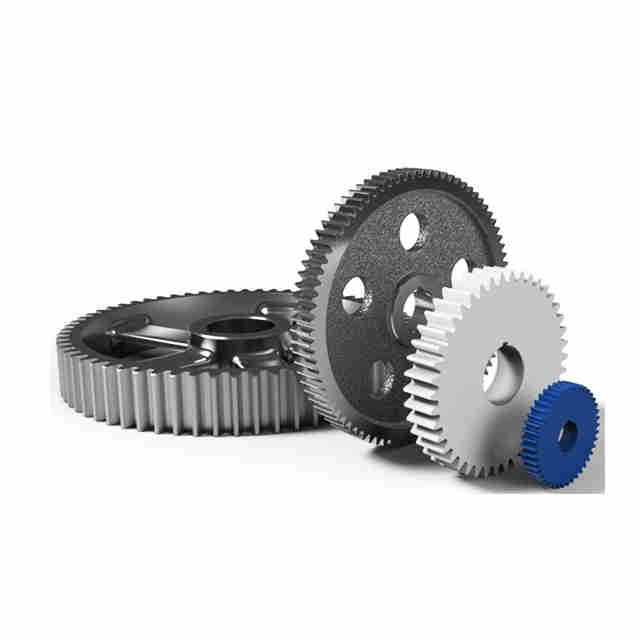
Spur gears feature straight teeth parallel to the axis of rotation, providing simplicity and efficiency in various machinery. They are known for their ease of manufacturing and cost-effectiveness. Below are the key parameters for spur gears:
- Module (M): Typically ranges from 0.5 to 12 mm, defining tooth size.
- Number of Teeth (Z): Varies based on application, from 10 to 150 or more.
- Pressure Angle (α): Commonly 20° or 14.5°, affecting tooth strength and engagement.
- Face Width (B): Usually 10-50 mm, influencing load capacity.
- Material: Often made from steel, brass, or plastic, depending on load and environment.
- Hardness: Surface hardness can reach 60 HRC for high-wear resistance.
- Accuracy Grade: Ranges from DIN 5 to 10 for precision applications.
| Parameter |
Typical Range |
Units |
| Module (M) |
0.5 - 12 |
mm |
| Number of Teeth (Z) |
10 - 150+ |
- |
| Pressure Angle (α) |
14.5° or 20° |
degrees |
| Face Width (B) |
10 - 50 |
mm |
| Material Hardness |
Up to 60 |
HRC |
Helical Gears: Design and Parameters
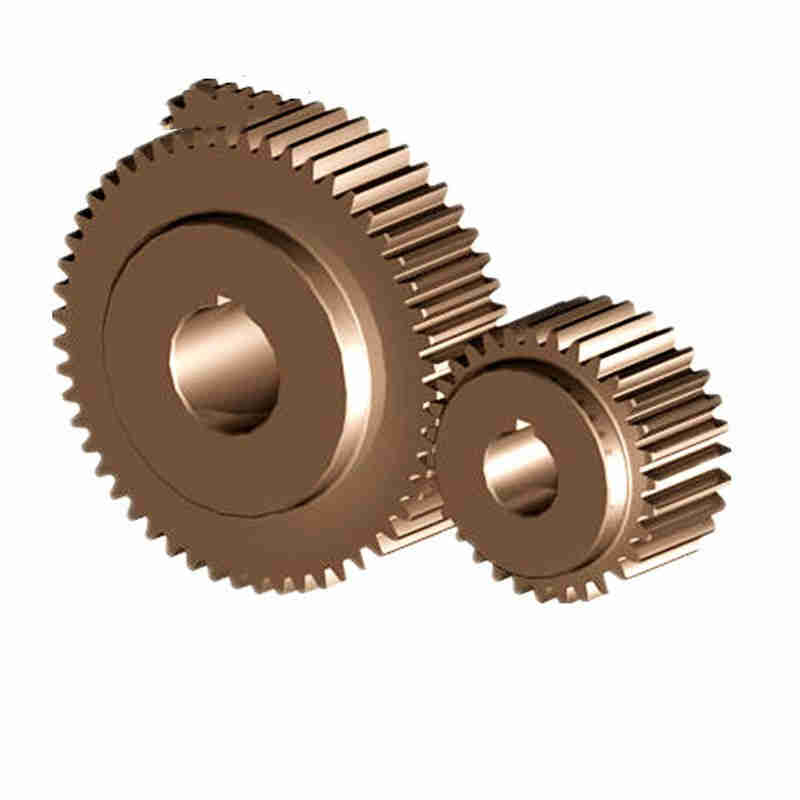
Helical gears have teeth cut at an angle to the axis, offering smoother and quieter operation compared to spur gears. They are ideal for high-speed applications and heavy loads. Key parameters include:
- Helix Angle (β): Ranges from 15° to 30°, determining the gear's smoothness.
- Module (M): Similar to spur gears, from 0.5 to 12 mm.
- Number of Teeth (Z): Can be higher, often 15-200, for better load distribution.
- Pressure Angle (α): Standard 20° or 14.5°, but tailored for helical engagement.
- Face Width (B): Wider than spur gears, typically 20-60 mm, to handle axial thrust.
- Material: Commonly steel or alloy, with treatments like carburizing for durability.
- Hardness: Up to 62 HRC for enhanced performance.
- Accuracy Grade: DIN 4-8 for high-precision uses.
| Parameter |
Typical Range |
Units |
| Helix Angle (β) |
15° - 30° |
degrees |
| Module (M) |
0.5 - 12 |
mm |
| Number of Teeth (Z) |
15 - 200 |
- |
| Face Width (B) |
20 - 60 |
mm |
| Material Hardness |
Up to 62 |
HRC |
Applications of Spur and Helical Gears
Spur gears are commonly used in low-speed applications such as conveyor systems, clocks, and simple machinery where noise is not a concern. Helical gears excel in automotive transmissions, industrial machinery, and high-speed equipment due to their quiet operation and ability to handle higher loads.
FAQs: Spur Gear and Helical Gear
What is the main difference between a spur gear and a helical gear?
Spur gears have straight teeth aligned parallel to the gear's axis, resulting in sudden tooth engagement that can cause noise and vibration. Helical gears have angled teeth that engage gradually, providing smoother, quieter operation and higher load capacity, but they generate axial thrust that requires management.
Which gear type is more efficient for high-speed applications?
Helical gears are more efficient for high-speed applications because their angled teeth allow for continuous contact and reduced shock loading. This design minimizes noise and wear, making them suitable for automotive and aerospace industries where speed and reliability are critical.
Can spur gears and helical gears be used together?
No, spur gears and helical gears cannot mesh directly due to their different tooth geometries. Spur gears require parallel shafts with straight teeth, while helical gears need similarly angled teeth to mate properly. Mixing them would cause improper engagement, leading to failure and damage.
How do I choose between a spur gear and a helical gear for my project?
Consider factors like speed, load, noise tolerance, and cost. Spur gears are cost-effective and simple for low-speed, low-noise applications. Helical gears are better for high-speed, high-load scenarios where quiet operation is essential, though they are more complex and expensive to manufacture.
What materials are commonly used for these gears?
Spur and helical gears are often made from materials such as carbon steel, alloy steel, brass, or plastics. Steel gears are heat-treated for hardness, while plastics are used for lightweight, corrosion-resistant applications. Material choice depends on load requirements, environment, and budget.
How do I maintain spur and helical gears?
Regular maintenance includes lubrication to reduce friction and wear, inspection for tooth damage or misalignment, and ensuring proper alignment of shafts. For helical gears, monitor axial thrust and use thrust bearings if necessary. Clean gears periodically to prevent debris buildup, which can cause premature failure.
What are the advantages of helical gears over spur gears?
Helical gears offer smoother operation, higher load capacity, and reduced noise due to gradual tooth engagement. They are ideal for high-speed applications and can transmit more power efficiently. However, they require more complex manufacturing and generate axial forces that need to be addressed with bearings.
Are spur gears easier to manufacture than helical gears?
Yes, spur gears are generally easier and cheaper to manufacture because their straight teeth simplify the cutting process. Helical gears require specialized machinery to create the helix angle, increasing production time and cost, but the benefits in performance often justify the expense.
What is the typical lifespan of these gears?
Lifespan varies based on material, load, maintenance, and operating conditions. Well-maintained steel gears can last decades in moderate applications, while high-load or poor lubrication scenarios may reduce lifespan. Regular inspections and proper care are key to maximizing durability.
Can I customize spur and helical gears for specific needs?
Yes, both gear types can be customized in terms of size, material, hardness, and tooth profile to meet specific application requirements. Manufacturers often provide options for module, number of teeth, and coatings to enhance performance in unique environments.