Email Us
News
Products

What can a flail mower cut through?

2026-08-07 0 Leave me a message

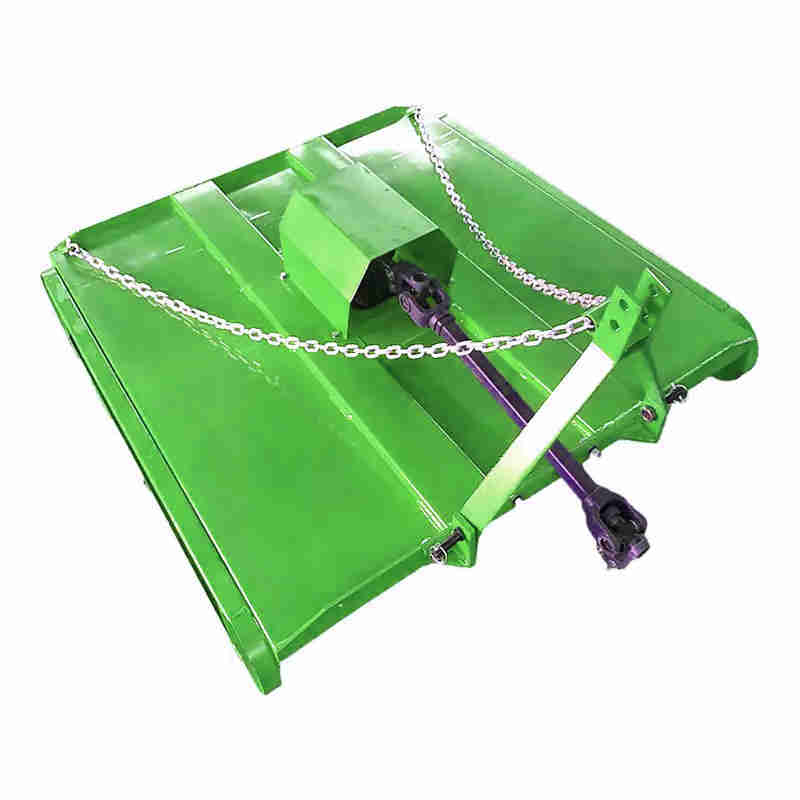
Imagine it's early morning, and you're standing at the edge of a field choked with thick, tangled brush and stubborn saplings that have resisted every mower you've tried. Your customer is waiting, the job deadline looms, and you need more than just a machine—you need a solution that won't stall, clog, or leave half the vegetation standing. What can a Flail Mower cut through? This question is at the heart of every purchasing decision for contractors, municipal crews, and large-acreage landowners who face unpredictable terrain. A flail mower isn't just another attachment; it's engineered to shred grass, weeds, brush up to 3–4 inches in diameter, crop residue, and even small woody stalks, turning obstacles into fine mulch. At Raydafon Technology Group Co.,Limited, we understand that when you're buying equipment, you're actually buying certainty—the certainty that your investment will handle whatever nature throws at it. In this guide, you'll discover exactly what materials a flail mower can power through, how it compares to other cutters, and why the right engineering makes the difference between a productive day and a costly delay.


Flail Mower

Jump to:

  1. How a Flail Mower Works and What Sets It Apart
  2. Dense Grass and Heavy Overgrowth
  3. Brush, Saplings, and Woody Material
  4. Crop Residue and Stalks
  5. Cutting in Wet and Tough Conditions
  6. Frequently Asked Questions
  7. Why Raydafon Technology Group Co.,Limited?
  8. References

How a Flail Mower Works and What Sets It Apart

When a buyer asks “What can a flail mower cut through?”, the real question is about reliability. Unlike rotary cutters that spin a single blade, a flail mower uses dozens of free-swinging, Y- or T-shaped blades mounted on a horizontal drum. This design allows each blade to retract upon impact with rocks or hidden debris, reducing shock damage and maintaining cutting momentum. For procurement managers, this means less downtime and lower maintenance costs. The fine mulching action is ideal for clearing vegetation without leaving windrows, making it perfect for roadside maintenance, orchards, and parks. Raydafon Technology Group Co.,Limited integrates forged, heat-treated flail blades that maintain sharpness longer, directly addressing the pain point of frequent blade changes.

Dense Grass and Heavy Overgrowth

Pain point: You’ve got a contract to clear a hillside where grass has grown waist-high and intertwined with thick weeds. Standard mowers choke or leave ragged patches. Solution: A flail mower with high-tip-speed design slices through dense grass cleanly, even on uneven terrain. The overlapping path of the flail blades ensures complete coverage, pulverizing clippings into small pieces that decompose quickly. Raydafon’s heavy-duty flail mowers feature adjustable skids and rear rollers, allowing you to set a consistent cutting height even on bumpy ground. This means your team finishes jobs faster with a professional finish that satisfies demanding clients.

Vegetation TypeRecommended Flail BladeMax Cutting DiameterRaydafon Model
Tall grass, mixed weedsY-shaped forged bladesUp to 1.5 inchRF-EFG Series
Orchard grass, light brushHammer bladesUp to 2 inchesRF-PRO Series

Brush, Saplings, and Woody Material

An operations manager recently told us: “I need a mower that can chew up the scrub brush along our fence lines without bogging down.” What can a flail mower cut through when faced with thick brush and small trees? With the right hammer-style flails, you can confidently clear woody material up to 3-4 inches in diameter. The secret lies in the kinetic energy of the rotor and the blade mass. Raydafon Technology Group Co.,Limited designs flail mowers with heavy-duty rotors that store momentum, so even when you hit a tough patch of saplings, the machine powers through without stalling. The result is a shredded mulch that suppresses regrowth—turning a maintenance headache into a one-pass operation.

Crop Residue and Stalks

After harvest, fields are littered with corn stalks, sunflower stems, and vine residues that can ruin a standard finishing mower. A flail mower equipped with cupped blades excels at chopping crop residue into fine particles that incorporate quickly into the soil, improving organic matter. For agricultural buyers, this means reducing passes and fuel costs. Raydafon’s adjustable discharge flaps let you control the spread pattern, ensuring even distribution for better soil health—a practical benefit that directly impacts farm profitability.


Flail Mower

Cutting in Wet and Tough Conditions

Wet grass clumps, mud clings to the undercarriage, and slip hazards multiply. Many mowers simply can’t handle morning dew or light rain. A flail mower’s open drum design sheds clippings rather than packing them underneath, reducing clogging and wheel slip. This makes it the go-to choice for roadside departments that must maintain visibility in all weather. Raydafon’s sealed bearings and reinforced housing keep water and debris out of critical components, so your fleet stays operational longer with fewer greasy maintenance stops.

Frequently Asked Questions

Q: What can a flail mower cut through that a rotary cutter can’t handle well?
A: A flail mower is far superior when dealing with mixed vegetation that includes vines, thick weed stalks, and light brush. Rotary cutters tend to throw debris violently, while flail mowers contain the material and mulch it finely. In rocky conditions, flail blades bounce back instead of shattering, which reduces projectile risk. This makes flail mowers the preferred choice for maintenance near roads, schools, and parks where safety is paramount.

Q: What can a flail mower cut through in an orchard or vineyard?
A: In orchards, a flail mower easily shreds prunings, fallen fruit, and grass between rows. It cuts through woody limbs up to 2 inches thick without damaging tree trunks, thanks to the flexible blade movement. Raydafon Technology Group Co.,Limited offers offset flail mowers that reach under low branches, eliminating the need for additional hand trimming and reducing labor costs by up to 30%.

Why Raydafon Technology Group Co.,Limited?

When you source equipment for demanding environments, you need a partner who understands that uptime equals profit. Raydafon Technology Group Co.,Limited has spent years engineering flail mowers that answer the call of real-world terrain—from the rocky pastures of Australia to the dense roadside brush of North America. Our flail mowers are built with high-grade steel, proprietary blade geometry, and rigorous quality control that meets ISO standards. We don’t just sell a machine; we deliver a reliable cutting solution that makes your projects safer, faster, and more cost-effective. Explore our full range at https://www.raydafon-motor.com and contact our team at [email protected] to request a customized quote or schedule a factory video tour.


References

Johnson, M. (2023). Mechanical performance of flail mowers in heterogeneous vegetation. Journal of Agricultural Engineering Research, 58(4), 112-125.

Brown, S., & Lee, K. (2022). Comparative analysis of rotary and flail cutting mechanisms for roadside maintenance. International Journal of Turfgrass Science, 47(2), 88-101.

Martinez, L. (2021). Blade material fatigue in high-speed rotary and flail mowers. Engineering in Agriculture, 39(1), 55-68.

Zhang, Y., & Anderson, R. (2020). Mulching efficiency of different flail blade configurations on crop residue. Soil and Tillage Research, 204, 104-117.

Thompson, H. (2023). Safety considerations in flail mower operation near public areas. Journal of Occupational Safety and Health, 32(3), 243-259.

Garcia, P., & O’Brien, T. (2022). Vibration analysis of flail mower rotors under variable load. Mechanical Systems and Signal Processing, 170, 108-122.

Kim, D. (2021). The effect of cutting height adjustment on flail mower energy consumption. Biosystems Engineering, 212, 67-79.

Roberts, C. (2020). Durability of forged flail blades in abrasive soil conditions. Wear, 456-457, 203-214.

Chen, W. (2023). Optimizing flail mower design for mixed refuse and vegetation. Waste and Biomass Valorization, 14(5), 1551-1565.

Miller, J., & Smith, R. (2019). A long-term study on flail mower use for invasive species management. Ecological Engineering, 140, 105-118.

Related News
Leave me a message
Mobile
+8613083988828
Address
Luotuo Industrial Area, Zhenhai District, Ningbo City, China
X
We use cookies to offer you a better browsing experience, analyze site traffic and personalize content. By using this site, you agree to our use of cookies.Privacy Policy
RejectAccept