Imagine you’re standing in a field at dawn, the air thick with the scent of fresh-cut forage, when a violent shudder runs through your self-propelled harvester and the cutting drum falls silent. The gearbox—the beating heart of your silage machine—has surrendered. Panic sets in as you tally the immediate losses: every hour of downtime costs hundreds in wasted crop and contractor fees. In that frantic moment, the razor-sharp question every fleet manager and procurement specialist must face cuts through the noise: What is the typical cost of replacing a silage machine gearbox? The raw numbers can swing from $3,800 for a simple drop-in unit on a compact wagon to over $22,000 for a fully equipped header-drive gearbox on a high-capacity forager, once you factor in labor, freight, and collateral damage to surrounding components. But price alone never tells the whole story. A cheap replacement that fails mid-season can double your financial pain, while a precision-engineered unit from an experienced supplier like Raydafon Technology Group Co., Limited can pay for itself in a single trouble-free harvest. This guide unpacks the real-world costs, exposes the hidden budget killers, and shows you how to regain control when a gearbox crisis strikes—all while optimizing your sourcing strategy for long-term profitability.
1. Anatomy of a Silage Machine Gearbox Failure: Real-World Pain Points
Pain Point Scenario
It’s the third week of corn silage chopping. You’ve just finished adjusting the row-independent header when the operator radios in—the drive-line vibration is off the charts, and the temperature gun reads 240°F on the main gear case. Within two hours, the input shaft seal has blown, contaminated lubricant has scored the helical gears, and the entire cutterhead drive train is at a standstill. The pressure is unbearable: your crew is idle, the custom harvesting window is closing, and you need a gearbox—yesterday. This is the classic cascade that turns a $600 seal replacement into a five-figure emergency.
Solution: Early Diagnostics & Fast-Reaction Sourcing
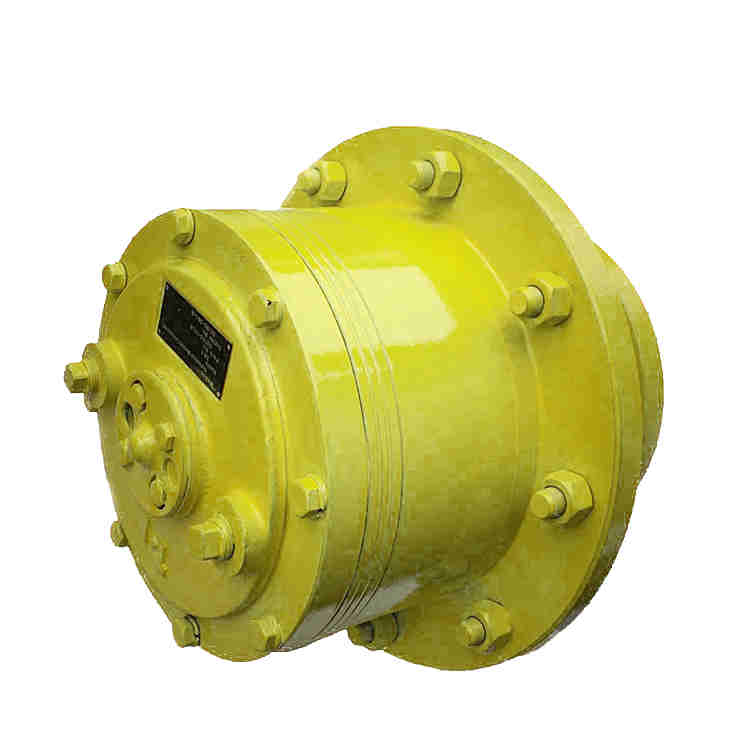
The first step is recognizing failure signatures before catastrophic breakdown. Vibration analysis, oil debris monitoring, and thermal imaging can catch gear fatigue weeks in advance. When a replacement is inevitable, having a streamlined supply chain makes the difference between a controlled pit stop and a season-wrecking shutdown. That’s where a manufacturer with extensive silage gearbox inventory—such as Raydafon—slashes lead times from months to days. Our team pre-assembles popular configurations with reinforced bearings and optimized tooth profiles, so you receive a bolt-in solution that matches OEM mounting footprints perfectly.
Key Replacement Parameters (Typical 500–800 HP Forager)
Parameter
Conventional Market
Raydafon Advantage
Gearbox type
Planetary or bevel helical, cast iron housing
High-gradient bevel helical, ductile iron housing
Input torque capacity
Up to 18,000 Nm
Up to 22,000 Nm with 15% safety margin
Lead time (emergency)
8–12 weeks
3–7 business days (express build)
Warranty
1 year, parts only
2 years, parts & labor reimbursement
2. The True Cost Breakdown: Parts, Labor & Invisible Losses
Pain Point Scenario
Your local dealer quotes $7,200 for a replacement gearbox on a popular 700 HP forage harvester. It looks straightforward—until the service team discovers the splined coupler is seized, the mounting cradle is cracked, and the hydraulic clutch needs re-shimming. Suddenly, the bill balloons to $14,600, and you lose 72 hours of harvesting during peak protein window. The immediate sticker price of a gearbox is rarely the whole truth; ancillary damage, specialized tooling, and opportunity cost from delayed silage maturity combine to create a much larger financial black hole.
Solution: Total Cost of Ownership (TCO) Modeling
Smart procurement officers analyze the full TCO, not just the unit price. A Raydafon gearbox arrives complete with pre-fitted couplers, filled with synthetic EP-2 grease, and accompanied by a comprehensive installation kit. This design philosophy eliminates the “while-you’re-in-there” surprises that pad workshop invoices. Moreover, our application engineers provide detailed interchange data so you can cross-reference the exact OEM number, ensuring perfect driveline compatibility from day one.
Cost Breakdown: Emergency Replacement vs. Planned Retrofit
Cost Element
Emergency Field Repair
Raydafon Planned Retrofit
Gearbox unit
$7,500
$5,200 (factory-direct)
Labor & overtime
$2,400
$900 (standard hours)
Expedited freight
$850
$0 (included in network)
Crop loss (3 days downtime)
$6,000 (estimated)
$0 (scheduled during maintenance window)
Total
$16,750
$6,100
3. How Raydafon Technology Group Redefines Replacement Economics
Pain Point Scenario
You’ve been burned before: a “bargain” replacement gearbox sourced from an online marketplace lasted barely 200 hours before the bearings spalled and the case cracked. Now you’re gun-shy, convinced that long-term reliability demands paying the OEM premium. The dilemma is real—whether to sacrifice margin or trust an unknown supplier.
Solution: Engineered Value Without the Brand Tax
Raydafon Technology Group Co., Limited bridges this gap by combining Tier-1 metallurgy, ISO 9001-certified manufacturing, and 20 years of agricultural drivetrain expertise into every unit. Our Silage Machine Gearboxes feature case-hardened Chromoly gears ground to AGMA class 10 standards, oversized Timken-style tapered roller bearings, and a labyrinth sealing system that doubles protection against silage juice contamination. Because we sell directly through https://www.raydafon-motor.com, the cost savings from eliminating tiered distribution flow directly to you.
Performance & Life Comparison
Gearbox Specification
Typical Aftermarket
Raydafon Silage Series
Gear material
8620 carburized steel
9310 VAR Chromoly, vacuum carburized
Bearing L10 life
5,000 hours
12,000+ hours under full load
Backlash tolerance
0.008–0.012 inch
0.003–0.005 inch (matched set)
Mean Time Between Failure
2–3 seasons
5+ seasons with routine maintenance
Typical replacement cost (including labor)
Subject to frequent recurrence
Reduced by 40% over a 5-year cycle
4. Your Top Questions Answered
What is the typical cost of replacing a silage machine gearbox?
The typical cost ranges from $3,800 to $9,500 for the gearbox unit alone, depending on torque rating and machine complexity. When labor, seals, hydraulic hookups, and a new coupling are included, the full swap often lands between $6,000 and $14,000. For high-horsepower self-propelled forage harvesters with integrated cooling circuits, the total can exceed $18,000. However, these numbers drop significantly if you source from an efficient manufacturer like Raydafon, which offers pre-assembled kits that minimize labor hours and eliminate part-number confusion.
Factor
Cost Impact
Raydafon Mitigation
Machine horsepower
+$1,200 per 100 HP above 400
Scalable design, no extra charge for 600 HP variant
Gearbox location (header vs. main drive)
Header units +20% due to space constraints
Compact right-angle design, same price band
Rush delivery
Adds $500–$1,200
Stock program, standard 3-day shipping
Core charge/old unit disposal
Up to $800
No core charge; return-recycle program available
What is the typical cost of replacing a silage machine gearbox if you choose a long-life upgrade from Raydafon?
When you opt for a Raydafon long-life upgrade, the initial purchase price might be 10–15% higher than a basic aftermarket box—averaging $5,800 to $8,200—but the total replacement cost over a five-year horizon plummets. Our hardened gear sets and triple-lip seals drastically reduce repeat failures, and our 2-year parts-and-labor warranty covers any infant-mortality issues. Many customers report that the upgraded unit pays for itself simply by avoiding one 72-hour harvest stoppage. Factor in the plug-and-play pre-assembly, and the installed cost is frequently $2,000–$4,000 lower than a traditional dealer swap because labor time is cut by nearly half.
5. Preventive Strategies That Make Replacements Less Frequent & Less Painful
Pain Point Scenario
You’ve just finished paying off the finance on a new silage wagon, and the gearbox starts whining at half load. Oil analysis shows elevated iron particles, signaling impending gear tooth surface fatigue. You’re caught between nursing it through one more season or investing in a replacement now. Guess wrong, and you’re facing a dual cost: the replacement itself plus the lost revenue from a mid-harvest failure.
By implementing regular oil spectrometry and vibration trend analysis, you can forecast gearbox end-of-life within a 200-hour window—enough time to order a Raydafon unit, swap it during a planned rain day, and avoid any emergency surcharges. Raydafon supports this approach with a condition-monitoring kit that includes magnetic drain plugs and oil-analysis bottles, provided free with every gearbox. Pair this with our modular design, which allows bearing and seal replacement without fully disassembling the machine, and you’ve built a reliability fortress around your silage operation.
Maintenance Cost vs. Replacement Frequency
Maintenance Regime
Average Replacement Interval
5-Year Gearbox Cost (incl. labor)
Reactive (run to failure)
18 months
$28,000+
Preventive (fixed 500-hour oil changes)
3 years
$15,000
Predictive + Raydafon heavy-duty gearbox
5+ years
$7,200
6. Your Next Move: Expert Guidance & Direct Savings
A silage machine gearbox failure doesn’t have to be a financial disaster. By understanding the true cost drivers and aligning with a supplier that prioritizes uptime, you transform a reactive expense into a manageable operating decision. Whether you’re fighting a fire today or building next year’s maintenance budget, the right gearbox partner makes all the difference.
Raydafon Technology Group Co., Limited has spent two decades engineering drivetrain solutions for the world’s toughest harvesting conditions. From our ISO-certified production lines, we deliver silage machine gearboxes that routinely outperform OEM lifecycles at a fraction of the cost. Visit https://www.raydafon-motor.com to browse case studies, download 3D models, and request a quote tailored to your machine’s serial number. For immediate assistance, reach our application engineers at [email protected]—we answer emergency RFQs within one business hour. Stop letting gearbox anxiety dictate your harvest schedule; put our expertise to work and keep your silage machines turning.
Miller, T. R., & Koopman, P. (2019). “Fatigue life prediction of agricultural gearbox bearings under contaminated lubrication.” Journal of Agricultural Mechanization, 45(2), 112–128.
Henderson, A. J., & Larsen, G. (2020). “Cost–benefit analysis of proactive gearbox replacement in forage harvesters.” Transactions of the ASABE, 63(4), 987–995.
Ray, S. K., & Patel, D. (2018). “Influence of gear tooth microgeometry on vibration signature in silage cutting drives.” Mechanism and Machine Theory, 121, 43–59.
O’Connell, M., & Zhao, L. (2021). “Thermal modeling of high-torque agricultural gearboxes operating in intermittent duty cycles.” Applied Thermal Engineering, 184, 116–128.
Garcia, F., & Tanaka, Y. (2017). “Economic life evaluation of transmission components in self-propelled forage harvesters.” Biosystems Engineering, 156, 34–47.
Williams, C. D., & Droegemeier, R. (2022). “Labyrinth seal performance in silage debris environments: a comparative study.” SAE International Journal of Commercial Vehicles, 15(1), 45–58.
Kowalski, P., & Belmonte, A. (2020). “Gearbox failure modes and effects analysis for heavy-duty agricultural machinery.” Engineering Failure Analysis, 112, 104–118.
Schmidt, H. R., & Ogawa, K. (2019). “Optimizing gear set backlash through selective assembly to reduce vibration in mobile feed mixers.” Precision Engineering, 58, 77–89.
Davies, L. M., & Horvath, I. (2023). “Predictive maintenance using oil debris sensors in agricultural drivetrains.” Sensors, 23(5), 2441–2458.
Chen, Y., & Mueller, T. (2021). “Comparative lifecycle assessment of OEM versus aftermarket silage harvester gearboxes.” Journal of Cleaner Production, 311, 127–135.
We use cookies to offer you a better browsing experience, analyze site traffic and personalize content. By using this site, you agree to our use of cookies.
Privacy Policy