Email Us
News
Products

What is a sprocket and how does it work?

2026-10-30 0 Leave me a message

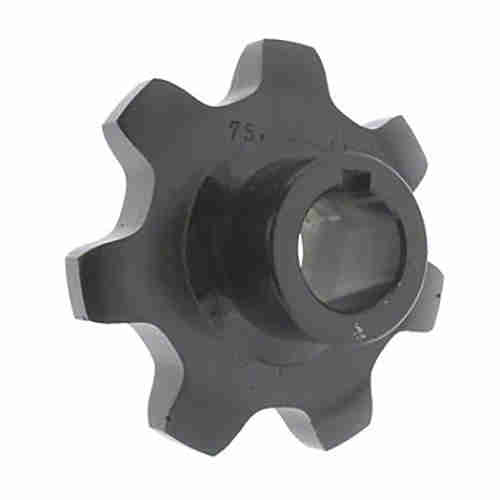
Imagine a packaging line in Ohio stops at 2:47 p.m. because a worn sprocket on the main drive chain has stripped three teeth. The maintenance team calls procurement, and the message is clear: find exact replacement Sprockets before the next shift. If you buy industrial power transmission components, this scenario is not hypothetical—it is a weekly pressure test. What is a sprocket and how does it work? At its core, a sprocket is a toothed wheel that engages with a roller chain to transmit rotary motion and torque between shafts. Unlike a gear that meshes with another gear, a sprocket works with a chain, which allows power to travel over longer distances without slipping. Understanding this mechanism is the first step to avoiding costly downtime, rejecting out-of-spec parts, and building a supply chain that survives production peaks. Raydafon Technology Group Co., Limited helps procurement teams move from emergency buying to planned sourcing with engineered sprockets that meet print, hardness, and delivery requirements.

  1. What Is a Sprocket and How Does It Work?
  2. Common Sprocket Buying Challenges
  3. How Raydafon Solves Sprocket Sourcing Problems
  4. Sprocket Selection Parameters
  5. Sprocket Q&A: What Is a Sprocket and How Does It Work?
  6. Why Choose Raydafon Technology Group Co., Limited

What Is a Sprocket and How Does It Work?

A sprocket looks simple from the outside, but its geometry decides whether a drive system runs smoothly or chews through chains. The toothed rim is cut to match a specific chain pitch, which is the distance between roller centers. As the sprocket rotates, each tooth enters the gap between chain rollers and pulls the chain forward. This engagement converts rotational input into linear chain movement or transfers power to another shaft. Because there is no friction-drive slip, sprockets keep timing accurate on conveyors, agricultural equipment, packaging machines, and heavy-duty material handling lines.

For purchasing professionals, the key insight is that a sprocket is not a generic wheel. Bore size, tooth count, pitch, hub configuration, and heat treatment must match the application. A mismatch of only a few millimeters in bore or one tooth count can cause severe wear, noise, and unplanned downtime. That is why sourcing teams need a supplier that reads drawings carefully and confirms every dimension before production.


Sprockets

Common Sprocket Buying Challenges

A maintenance manager in a food processing plant once received 300 sprockets that measured within tolerance on outside diameter but failed on keyway width. The entire batch had to be reworked locally, adding two weeks and $14,000 in unplanned labor. Another buyer in the logistics industry faced delayed shipments because a supplier subcontracted heat treatment without traceability, and the hardness varied from part to part. These are common pain points: unclear material certifications, inconsistent tooth profile, poor packaging that causes damage in transit, and long lead times that force emergency air freight.

Procurement teams also struggle with suppliers that do not ask the right technical questions. Chain pitch, plate thickness, hub diameter, set screw location, and corrosion environment all affect performance. Without a structured quoting process, buyers receive parts that look right but fail early in the field.

How Raydafon Solves Sprocket Sourcing Problems

Raydafon Technology Group Co., Limited approaches every sprocket order as a custom power transmission project, even for standard catalog sizes. The process starts with a drawing review and material selection based on load, speed, and environmental exposure. carbon steel, stainless steel, and alloy steel options are matched to the application. Heat treatment is controlled in-house with batch traceability, so hardness values remain consistent from the first sprocket to the last.

ParameterRaydafon CapabilityBenefit for Buyers
Material optionsC45, 40Cr, 304/316 stainless, 42CrMoMatched to corrosion, load, and wear needs
Bore toleranceH7/H8 as standard, custom keywayReduces fitting time and shaft damage
Tooth profileANSI, DIN, ISO, JIS standardsExact chain compatibility
Heat treatmentInduction hardening, carburizing, quenchingConsistent surface hardness and core toughness
Quality documentsMaterial certificate, dimensional report, hardness testSupports incoming inspection and audits
Lead time15–25 days for custom, 7–10 days for stockAlignment with production planning

Sprocket Selection Parameters

Choosing the right sprocket starts with five numbers: chain pitch, number of teeth, bore diameter, keyway size, and hub style. For example, a drive system using a 16B-1 chain needs a sprocket with a 25.4 mm pitch and a tooth profile that matches the roller diameter. Tooth count determines speed ratio: a 21-tooth sprocket driving a 63-tooth sprocket creates a 3:1 reduction, increasing torque while reducing output speed. Face width and hub diameter must fit the available shaft length and bearing spacing.

Environmental factors also matter. A sprocket in a wet washdown area should use stainless steel or a corrosion-resistant coating. A high-cycle conveyor in a dusty cement plant may need induction-hardened teeth to resist abrasive wear. Raydafon engineering support helps buyers translate these field conditions into a clear specification, reducing the risk of overpaying for unnecessary features or under-specifying critical surfaces.

Sprocket Q&A: What Is a Sprocket and How Does It Work?

Q: What is a sprocket and how does it work in a roller chain drive system?
A: A sprocket is a profiled wheel with teeth that fit into a roller chain. When the driving sprocket turns, its teeth engage the chain rollers and pull the chain forward. The chain then wraps around a driven sprocket, transferring rotary motion and torque. Because the chain cannot slip under normal load, the drive maintains a fixed speed ratio between the two shafts. This makes sprockets ideal for conveyors, motorcycles, agricultural equipment, and industrial machinery that need synchronized movement.

Q: What is a sprocket and how does it work when changing speed or torque?
A: A sprocket works as part of a ratio pair. A smaller driving sprocket turning a larger driven sprocket reduces speed and increases torque, while a larger driver and smaller driven sprocket increase speed and reduce torque. The ratio is determined simply by the number of teeth on each sprocket. Changing tooth count is one of the fastest ways to adjust machine output without redesigning the entire drive, which is why many maintenance teams keep multiple sprocket sizes available for trial runs and production changes.

Why Choose Raydafon Technology Group Co., Limited

Raydafon Technology Group Co., Limited supplies sprockets to OEMs, distributors, and end users across North America, Europe, and Southeast Asia. The company understands that procurement teams do not buy metal parts alone—they buy reduced downtime, repeatable quality, and on-time delivery. That is why every order includes clear communication, pre-production samples when required, and after-sales technical support. Whether you need 20 pieces for a pilot line or 5,000 pieces for an annual contract, the team treats each order with the same documentation discipline.

Ready to replace emergency sourcing with a reliable sprocket partner? Send your drawings, sample photos, or chain specifications to Raydafon Technology Group Co., Limited for a detailed quotation. The company’s experts will review your requirements and propose the right material, tooth profile, and heat treatment for your application. Contact [email protected] or visit https://www.raydafon-motor.com to start a sourcing conversation with a team that understands both sprocket engineering and procurement realities.


[1] Tordion, G. V., 1965, "On the Lubrication of Roller Chains", ASME Journal of Engineering for Industry, 87(3).

[2] Hollingworth, N. E., Hills, D. A., 1986, "Forces in a Flexible Chain Traveling Over a Sprocket", Journal of Mechanical Design, 108(1).

[3] Conwell, J. C., Johnson, G. E., 1996, "Experimental Investigation of Roller Chain Sprocket Impact", Journal of Sound and Vibration, 197(3).

[4] Pedersen, S. L., Hansen, J. M., Ambrósio, J. A. C., 2004, "A Roller Chain Drive Model Including Contact with Guide-Bars", Multibody System Dynamics, 12(3).

[5] Wang, K. W., 1992, "On the Stability of Chain Drive Systems", Journal of Mechanical Design, 114(1).

[6] Naji, M. R., Marshek, K. M., 1983, "Wear Mechanisms of Roller Chain Drive Systems", Wear, 85(3).

[7] Binder, R. C., 1956, "Mechanics of the Roller Chain Drive", Journal of Engineering for Industry, 78(1).

[8] Freudenstein, F., Maki, E. R., 1986, "The Mechanical Efficiency of Roller Chain Drives", Journal of Mechanisms, Transmissions, and Automation in Design, 108(2).

[9] James, C. J., 1994, "Fatigue Life Prediction of Sprocket Teeth Under Cyclic Loading", International Journal of Fatigue, 16(5).

[10] Rao, J. S., 2008, "Dynamic Analysis of Chain Sprocket Systems Considering Tooth Profile Errors", Mechanism and Machine Theory, 43(7).

Related News
Leave me a message
Mobile
+8613083988828
Address
Luotuo Industrial Area, Zhenhai District, Ningbo City, China
X
We use cookies to offer you a better browsing experience, analyze site traffic and personalize content. By using this site, you agree to our use of cookies. Privacy Policy
RejectAccept