Email Us
News
Products

How do you grease a wheel hub?

2026-10-14 0 Leave me a message

A maintenance crew at a busy logistics fleet notices a faint grinding noise from a trailer axle. By the time they inspect the hub, the bearing has already overheated, the grease has turned into a hard, crusty deposit, and the spindle shows scoring. The repair bill is five times the cost of a scheduled grease job. If you are sourcing Wheel Hub components or managing fleet uptime, the question "How do you grease a wheel hub?" is not just a shop-floor detail; it is a reliability and cost-control decision. Proper greasing removes friction, seals out water and road contaminants, and extends bearing life. Done incorrectly, it leads to premature failure, unscheduled downtime, and warranty disputes. In this guide, we distill the technical steps, procurement considerations, and maintenance parameters into a practical resource for industrial buyers, fleet managers, and maintenance engineers. Raydafon Technology Group Co.,Limited supports this process with precision-engineered hub and motor solutions designed for repeatable lubrication results.

Article Outline

  1. Why Wheel Hub Greasing Is a Purchasing Priority
  2. Tools and Preparation Before You Grease a Wheel Hub
  3. Step-by-Step: How Do You Grease a Wheel Hub?
  4. Quick Answers: How Do You Grease a Wheel Hub?
  5. How Procurement Teams Choose Reliable Hub Components
  6. Raydafon Technology Group Co.,Limited: Solving Greasing and Supply Challenges

1. Why Wheel Hub Greasing Is a Purchasing Priority

A purchasing manager sources hubs from the lowest-bid supplier. Three months later, warranty claims rise because maintenance teams pack bearings with incompatible lithium grease, causing the polyurea thickener to harden and the bearing to run dry. The plant loses 18 hours of production and the buyer faces a supplier audit.

The solution is to stop treating greasing as a random shop task. Standardize the procedure and specify grease with the correct thickener, base oil viscosity, and drop point. Use hubs with accessible grease channels, controlled seal grooves, and high-quality seals. This reduces failure rates, unscheduled downtime, and total cost of ownership. Procurement teams that include lubrication requirements in the RFQ process avoid most field failures linked to poor hub performance.

Grease Selection ParameterRecommended Range for Wheel HubsProcurement Impact
NLGI grade2 for general use; 1 or 0 for low ambient temperatureControls pumpability and channeling behavior
Base oil viscosity at 40°C100–220 cStBalances lubricant film thickness and churning drag
Drop point> 230°C for high-temperature brake areasPrevents grease melting and leakage
Thickener typeLithium complex, polyurea, or calcium sulfonateMust match bearing, seal, and operating environment
Water resistanceHigh washout resistanceProtects hub in wet, humid, or off-road conditions

2. Tools and Preparation Before You Grease a Wheel Hub

A maintenance team starts the job but realizes the torque wrench is out of calibration and the bearing packer is missing. They improvise with a screwdriver, overfill the hub, and damage the seal. The result is a leaking hub, contaminated brake shoes, and repeat labor costs within two weeks.

The better approach is to prepare a dedicated wheel hub greasing kit and follow a pre-task checklist. Use clean solvents, lint-free wipes, a bearing packer, and a calibrated torque wrench. An organized process keeps contamination out, avoids over-packing, and prevents costly rework. For buyers, specifying these tools in the maintenance manual reduces variability across multiple sites.


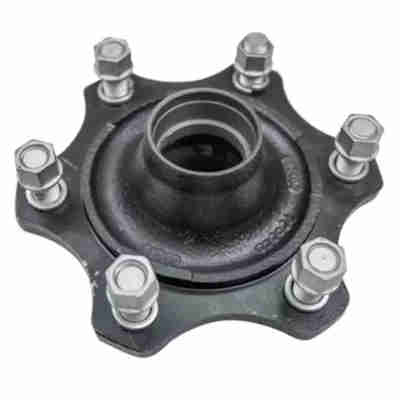
Wheel Hub
Tool or ItemRecommended SpecificationWhy It Matters
Torque wrenchCalibrated within ±3%, range 40–400 N·mPrevents under or over-torquing the axle nut
Bearing packerMechanical or hand-operated with clean adapterEnsures grease reaches all rollers without air pockets
Grease gunManual or pneumatic with correct fittingAccurate grease application to hub cavity
Solvent cleanerNon-residue, fast-drying bearing solventRemoves old grease and contaminants
Lint-free wipesLow-lint, cleanroom-grade clothPrevents fiber contamination in bearing
Seal driverCorrect diameter, soft-face or polyurethaneInstalls seals without distortion or lip damage

3. Step-by-Step: How Do You Grease a Wheel Hub?

A wheel hub is packed by hand, leaving air pockets. After 10,000 km, the bearing shows uneven wear and the hub temperature rises by 35°C. The fleet manager cannot trace whether the correct grease quantity was used because no one recorded the procedure.

The solution is to follow a repeatable six-step method and document each action. For every hub service, clean the cavity, inspect the bearing and seal, pack the bearing thoroughly, apply a controlled amount of grease to the hub cavity, install a new seal, and torque the axle nut to specification. Record the grease type, quantity, and torque value in the maintenance log. This creates traceability and supports warranty claims.

  • Step 1: Safely lift the vehicle and remove the wheel, brake drum or disc, and hub cap.
  • Step 2: Remove the outer bearing, then the hub. Clean all parts and inspect for pitting, discoloration, or seal damage.
  • Step 3: Pack the bearing using a bearing packer or palm method until grease fills all roller spaces.
  • Step 4: Apply grease to the hub cavity only 30%–50% by volume, not fully packed.
  • Step 5: Install a new seal using a proper seal driver. Do not reuse old seals.
  • Step 6: Reassemble the hub, spin it to distribute grease, and torque the axle nut to OEM specification.
Assembly ParameterTypical Value RangeMaintenance Note
Bearing fill ratio100% fill for bearing itselfEvery roller must be coated, no air pockets
Hub cavity fill ratio30%–50% by volumeLeaves room for heat expansion
Axle nut torque200–350 N·m depending on hub and axle sizeAlways follow OEM spec, not generic values
Seal replacementMandatory at every serviceOld seals lose lip tension and leak
Break-in checkAfter 500–1,000 km or 5–10 hoursInspect for leakage, noise, or excessive heat

4. Quick Answers: How Do You Grease a Wheel Hub?

Q1: How do you grease a wheel hub without over-packing it?

Apply grease to the clean bearing until every roller or ball is fully coated, but do not fill the entire hub cavity. The hub cavity should be filled only 30%–50% by volume to allow heat expansion and avoid seal blowout. Always rotate the bearing while packing to push out air pockets. Over-packing increases churning torque, raises temperature, and can force grease past the seal.

Q2: How do you grease a wheel hub when switching to a different grease type?

Never mix incompatible thickeners without flushing. Remove old grease completely with solvent, inspect for rust and wear, dry the parts, then apply the new grease. For high-load or wet environments, choose a calcium sulfonate or polyurea grease that matches the hub seal material. Confirm compatibility with the bearing manufacturer and document the change in your maintenance schedule.

5. How Procurement Teams Choose Reliable Hub Components

A buyer shortlists hubs by unit price alone, but after six months maintenance reports show seal failures due to poor surface finish and inconsistent grease channels. The cost per kilometer increases, and the procurement team is blamed for choosing a low-quality supplier.

The better strategy is to work with suppliers who provide full dimensional and material data, life test reports, and lubrication recommendations. Raydafon Technology Group Co.,Limited offers precision wheel hub and motor components with controlled seal grooves, consistent surface roughness, and documented grease retention performance. This reduces warranty returns and makes the maintenance team’s greasing procedure more effective.

Hub Component ParameterWhat to CheckRaydafon Value
Bearing materialGCr15 or equivalent with stable heat treatmentHigh-purity steel, controlled hardness
Seal groove roughnessRa 0.8–1.6 µmConsistent surface for reliable seal contact
Bearing clearanceC3 for high-temperature or heavily loaded hubsSpecified per application load
Grease channel designUniform depth and radiusPromotes even grease distribution
Axial runout< 0.02 mm at flange faceReduces vibration and seal lip wear
Load ratingDynamic load rating matched to axle loadEngineered to exceed application needs

6. Raydafon Technology Group Co.,Limited: Solving Greasing and Supply Challenges

For procurement engineers, the real challenge is not just knowing how to grease a wheel hub; it is securing components that make the process foolproof. Raydafon Technology Group Co.,Limited supports distributors, OEMs, and aftermarket buyers with hub assemblies and motor components designed for easier lubrication, longer service life, and lower warranty returns. Our technical team helps align grease specifications, seal design, and machining tolerances to your application. If your current supplier cannot explain why a hub runs hot or a seal leaks, contact us for a structured review.

Common ProblemRoot CauseRaydafon Solution
Hub runs hot after regreasingOver-packed cavity or wrong grease typeLubrication guideline matched to hub design
Seal leaks after short servicePoor seal groove finish or worn sealPrecision-machined seal grooves with controlled roughness
Bearing noise under loadIncorrect clearance or contaminationApplication-specific clearance and fit recommendations
Premature bearing failureIncompatible grease or starved lubricationDocumented grease compatibility and fill ratio specs

Have a specific wheel hub application or lubrication failure problem? Share your load, speed, and environment data, and our engineers will recommend a practical greasing and component specification. Use the contact details below to start the conversation.

Raydafon Technology Group Co.,Limited is a specialized manufacturer and global supply partner for precision motor and wheel hub systems. The company helps industrial buyers and maintenance teams solve greasing, durability, and total-cost problems through engineered components, consistent quality control, and responsive technical support. Visit https://www.raydafon-motor.com or contact us at [email protected] for product catalogs, lubrication specifications, and bulk pricing.


J. Liu, Y. Wang, 2020. Effect of grease thickener type on tapered roller bearing temperature rise. Tribology International, 142, 106012.

A. K. Gupta, S. Sharma, 2019. Grease relubrication intervals for heavy-duty vehicle wheel hubs. Lubrication Science, 31(5), 233-245.

M. Cann, E. Ioannides, 2018. Grease lubrication mechanisms in rolling bearings. Wear, 400-401, 1-10.

P. M. Lugt, 2016. A review on grease lubrication in rolling bearings. Tribology Transactions, 59(4), 665-682.

R. S. Dwyer-Joyce, 2015. The influence of bearing seal design on lubricant retention. Proc IMechE Part J: Journal of Engineering Tribology, 229(6), 725-738.

H. Rahnejat, S. Johns-Rahnejat, 2017. Multi-body dynamics and tribology of wheel hub bearing units. Proceedings of the Institution of Mechanical Engineers, Part K: Journal of Multi-body Dynamics, 231(1), 47-63.

K. T. Dang, L. Zhang, 2021. Water contamination in grease-lubricated hub bearings under off-road conditions. Tribology International, 160, 107023.

N. Yamamoto, T. Sato, 2022. Influence of grease fill ratio on churning torque and temperature in automotive hub units. Journal of Tribology, 144(3), 031202.

B. J. Hamrock, S. R. Schmid, 2018. Fundamentals of fluid film lubrication with application to bearing life. Tribology Letters, 66(2), 45.

C. Wang, M. Zhang, 2020. Fault diagnosis of wheel hub bearings under starved lubrication using vibration analysis. Mechanical Systems and Signal Processing, 140, 106700.

Related News
Leave me a message
Mobile
+8613083988828
Address
Luotuo Industrial Area, Zhenhai District, Ningbo City, China
X
We use cookies to offer you a better browsing experience, analyze site traffic and personalize content. By using this site, you agree to our use of cookies. Privacy Policy
RejectAccept