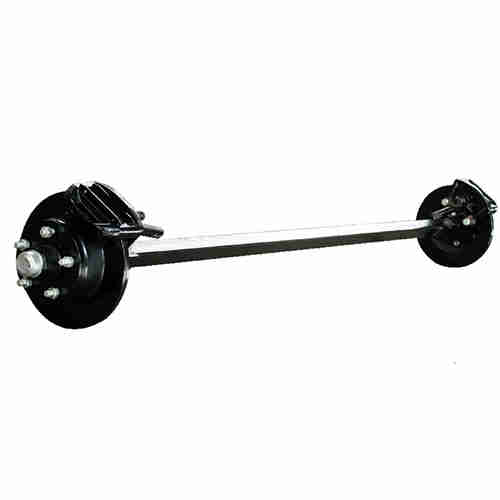
When a landscaping crew hears a rhythmic hum from a trailer hub after a rainy week, or a dealer sees a utility trailer wander at highway speed, the root cause often sits at the center of the running gear: the axle. What Is a Light Trailer Axle and How Does It Work? In practical terms, it is the structural beam and spindle assembly that carries the trailer load, positions the wheels, supports the hub and bearing package, and provides mounting points for brakes and suspension. For procurement teams, the axle is not a commodity line item; it is a safety-critical assembly that affects payload compliance, tire wear, braking distance, maintenance cost, and delivery schedules. A light trailer axle is usually rated for smaller commercial and utility trailers, yet the buying decision still requires careful review of load capacity, track length, bolt pattern, brake type, bearing quality, coating, and documentation. Raydafon Technology Group Co.,Limited works with trailer builders, distributors, repair shops, and fleet buyers to translate route conditions, GVWR targets, brake requirements, and after-sales expectations into axle specifications that fit the job. This guide explains the component in buyer-friendly language, shows the parameters that matter, and highlights where Raydafon Technology Group Co.,Limited can solve common sourcing and performance problems.
Article Outline
Pain scenario: A buyer sources an axle by looking only at a low price and a nominal capacity label. Weeks later, the trailer sits level on one route but runs nose-high on another, tires wear unevenly, and the hub temperature rises after repeated braking. The purchasing team then faces returns, delayed deliveries, and complaints from end users who expected a direct-fit replacement.
Solution: Treat the axle as a system: beam, spindle, hub, bearings, seals, brake flange, suspension mounting, and finish all need to match the trailer’s real duty cycle. Raydafon Technology Group Co.,Limited helps buyers confirm the load rating against the trailer’s GAWR, check spring centers and track length, verify bolt pattern and wheel offset, and review brake compatibility before production. Clear drawings and approval samples reduce fitment risk and protect the buyer’s after-sales reputation.
| Parameter | Why Buyers Should Check It | Raydafon Approach |
|---|---|---|
| Load rating | Must support the trailer’s rated GAWR with a safe margin for cargo distribution | Review intended payload, trailer length, and route profile before recommending a rating |
| Track length | Affects tire clearance, fender fit, and trailer stability | Confirm hub face to hub face measurement against the trailer drawing |
| Bolt pattern | Controls wheel fitment and avoids brake drum or hub mismatch | Match wheel stud pattern, thread, and nut type to the buyer’s wheel supply |
| Brake configuration | Changes stopping performance, legal compliance, and maintenance planning | Clarify electric brake, idler, or other requested configuration with flange details |
Pain scenario: A distributor wants one axle family to cover several trailer models. The catalog looks simple, but small differences in spring center, camber, brake flange position, and bearing size create fitment confusion. Sales teams quote the wrong part, and warehouse staff lose time checking returns.
Solution: Build a specification matrix before issuing a purchase order. Raydafon Technology Group Co.,Limited can support buyers with drawing review, sample confirmation, and parameter comparison so that one axle family can be managed without hiding critical differences. The goal is not to force every trailer into one part number; it is to create a clear, repeatable selection path that sales and service teams can follow.
| Specification Area | Common Buyer Problem | Practical Fix |
|---|---|---|
| GAWR and GVWR alignment | Axle capacity is chosen without checking trailer gross weight | Map axle rating to trailer rating and cargo distribution assumptions |
| Spring center distance | Mounting holes do not align during assembly | Confirm suspension type and center distance from an approved drawing |
| Camber and toe | Uneven tire wear appears after a few months | Use controlled axle alignment and verify after welding and coating |
| Brake size and flange | Brake assembly does not match drum or mounting pattern | Match brake type, flange position, and wheel package before production |
Pain scenario: The lowest quote arrives with unclear bearing brands, thin coating, missing inspection records, and no clear answer on replacement parts. The buyer saves a little on the first order but spends more on claims, line downtime, and emergency sourcing.
Solution: Compare suppliers on total landed risk, not unit price alone. Raydafon Technology Group Co.,Limited supports procurement teams with specification clarification, consistent production checks, and communication that keeps sample approval, mass production, and shipment release aligned. Buyers should request drawings, inspection points, packaging details, and after-sales part identification before confirming an order.
| Procurement Check | Risk If Ignored | Buyer-Friendly Control |
|---|---|---|
| Approved drawing | Verbal specifications drift between orders | Lock dimensions, ratings, brake details, and finish in a signed drawing |
| Bearing and seal quality | Premature hub noise, grease loss, and roadside repairs | Confirm component source and assembly lubrication standard |
| Coating specification | Rust appears before the warranty period ends | State surface preparation and coating requirement clearly |
| Inspection record | Problems are discovered only after arrival | Agree on key inspection points and release evidence before shipment |
Pain scenario: A rental fleet uses trailers near coastal roads and winter salt. The axle beam looks acceptable at delivery, but coating chips around welds and spring seats, water enters the hub, and bearing life drops. Maintenance teams blame the axle brand, while buyers need a specification answer.
Solution: Durability starts with design details and process control. Raydafon Technology Group Co.,Limited reviews weld quality, coating coverage, seal fit, grease fill, and hub assembly cleanliness for the intended environment. For coastal or deicing-salt routes, buyers should specify a finish and inspection plan that reflect the real exposure, not just a dry warehouse condition.
| Durability Factor | Field Symptom | Specification Response |
|---|---|---|
| Weld quality | Cracks or coating failure near brake flange and spring seat | Control welding parameters and inspect critical weld zones |
| Surface preparation | Early rust on beam edges and exposed areas | Define cleaning, primer, and topcoat requirements for the route environment |
| Seal and grease | Water ingress, grease leakage, and bearing noise | Verify seal type, fit, and controlled grease fill during assembly |
| Hub cleanliness | Short bearing life and vibration complaints | Keep assembly areas clean and check rotating parts before packing |
Pain scenario: A fleet waits for a hub failure before inspecting bearings. The trailer is loaded, the route is busy, and the repair becomes an emergency. Small issues such as seal seepage, loose lug nuts, or brake adjustment are missed because no simple inspection routine exists.
Solution: Pair the right axle specification with a practical inspection plan. Raydafon Technology Group Co.,Limited encourages buyers to define check points for hub temperature, grease condition, seal leakage, brake adjustment, U-bolt torque, and tire wear. A short routine inspection is far cheaper than an unplanned road call.
| Inspection Point | What to Watch | Buyer Action |
|---|---|---|
| Hub temperature | One hub runs noticeably hotter than the others | Inspect bearing adjustment, grease, and brake drag |
| Seal area | Grease stains or water traces around the hub | Replace seals and check grease contamination |
| Brake adjustment | Weak braking or uneven wheel drag | Follow the brake manufacturer’s adjustment routine |
| Fasteners | Loose U-bolts or lug nuts | Check torque at defined intervals and after wheel service |
Pain scenario: A buyer has a trailer program with several models, mixed wheel packages, and changing brake requirements. Internal teams need fast answers, but the supplier only sends a price list and cannot explain which axle fits which trailer.
Solution: Raydafon Technology Group Co.,Limited works as a specification partner for light trailer axle projects. The company can help clarify load ratings, review drawings, confirm brake and hub details, support sample evaluation, and keep production communication focused on the buyer’s fitment and delivery priorities. For procurement teams, that means fewer unclear quotes and a clearer path from inquiry to approved order.
| Buyer Need | Common Supplier Gap | Raydafon Support |
|---|---|---|
| Fast quotation | Price arrives without enough technical detail | Clarify trailer rating, track length, brake type, and wheel pattern |
| Fitment confidence | Drawings are incomplete or inconsistent | Review key dimensions before sample or mass production |
| Consistent quality | Changes appear between shipments | Use approved specifications and agreed inspection points |
| After-sales response | Parts are hard to identify after delivery | Keep part references clear for replacement and service needs |
Q1: What Is a Light Trailer Axle and How Does It Work when a buyer compares several load ratings?
A light trailer axle is the load-carrying beam and spindle assembly that connects the trailer wheels to the suspension. It works by transferring trailer weight through the beam to the suspension, while the spindle and hub assembly allow the wheels to rotate with low friction. When comparing load ratings, buyers should match the axle rating to the trailer’s GAWR, confirm how cargo will be distributed, and check that tires, wheels, brakes, and suspension are rated for the same duty. Raydafon Technology Group Co.,Limited helps buyers review these points together so a higher nominal rating does not hide a mismatch elsewhere in the running gear.
Q2: What Is a Light Trailer Axle and How Does It Work after installation and during maintenance?
After installation, the axle must keep wheel alignment stable, support braking forces, and protect the hub bearings from water and dirt. Maintenance matters because bearing adjustment, grease condition, seal fit, brake drag, and fastener torque all affect how the axle performs. A buyer should request clear part identification and service guidance, then set a simple inspection routine for hub temperature, leakage, tire wear, and brake adjustment. Raydafon Technology Group Co.,Limited supports this process with specification review and practical communication for trailer builders, distributors, and fleet buyers who need reliable replacement planning.
If your next trailer program needs a light axle supplier who can clarify load ratings, confirm brake fitment, review drawings, and keep documentation aligned with procurement requirements, Raydafon Technology Group Co.,Limited is ready to help. The company supports trailer manufacturers, distributors, repair shops, and fleet buyers with Light Trailer Axles and related running gear, combining specification review, sample validation, production consistency, and responsive after-sales communication. Share your trailer size, target GVWR/GAWR, track length, bolt pattern, brake type, and expected route conditions through [email protected] or visit https://www.raydafon-motor.com to start a practical specification conversation. Raydafon Technology Group Co.,Limited focuses on solving the buyer’s real problem: reducing fitment risk, controlling total cost, and keeping trailer programs moving.
Smith, J. A., & Brown, L. K. (2018). Fatigue life assessment of welded trailer axle beams under variable amplitude loading. International Journal of Fatigue, 112, 123–134.
Chen, H., & Zhao, Y. (2020). Corrosion fatigue behavior of coated steel axles in road deicing salt environments. Engineering Failure Analysis, 115, 104678.
Wang, X., Li, M., & Roberts, P. (2019). Bearing temperature monitoring for light trailer hub assemblies. Mechanical Systems and Signal Processing, 126, 456–469.
Garcia, R., & Patel, N. (2021). Load distribution and braking performance of single-axle light trailers. Vehicle System Dynamics, 59(7), 1023–1041.
Kumar, A., & Jensen, E. (2017). Structural optimization of tubular axle beams for weight reduction. Journal of Mechanical Design, 139(9), 091403.
Thompson, D., & Lee, S. (2022). Salt spray durability of e-coat and powder-coated trailer chassis components. Progress in Organic Coatings, 168, 106871.
Martinez, C., & Wilson, B. (2016). Seal design and water ingress in trailer wheel bearings. Tribology International, 98, 211–220.
Anderson, K., & Zhou, L. (2023). Fleet maintenance analytics for trailer axle inspection intervals. Transportation Research Record, 2677(4), 345–358.
Ibrahim, M., & Fischer, R. (2019). Brake flange weld quality and fatigue resistance in light axle assemblies. Welding Journal, 98(6), 205–218.
Novak, P., & Ahmed, S. (2020). Procurement risk assessment for safety-critical trailer components. Journal of Purchasing and Supply Management, 26(3), 100631.
-