Email Us
News
Products

How often should center pivot irrigation gearboxes be serviced?

2026-05-15 0 Leave me a message

It starts with a whisper. The 3 AM phone call no farm manager wants—center pivot stalled in the dark, torque overload tripped, and 40 acres of soybeans gasping under a cloudless sky. You race out in the pickup, boots still half-tied, already calculating the yield loss per hour. The cause? A gearbox that hadn't been touched in four seasons. Here's the truth every purchasing manager and maintenance lead eventually learns the hard way: How often should Center Pivot Irrigation Gearboxes be serviced? The answer isn't buried in some dusty OEM binder. It's written in the mud under a seized worm gear. Industry consensus and field data point to an inspection every 500 to 800 operating hours or at minimum once per growing season, with comprehensive lubrication replacement, seal checks, and backlash measurements. But "recommended" means nothing when a single bearing failure cascades into a gear train meltdown. Procurement teams are increasingly shifting from reactive replacements to predictive service contracts—and the gearbox you choose today determines whether that 3 AM call comes next July. At Raydafon Technology Group Co.,Limited, we've helped irrigation dealers and large-scale growers build service schedules that prevent these exact scenarios, combining precision-engineered gearboxes with data-driven maintenance roadmaps. This guide unpacks everything you need to know, from spotting early failure symptoms to building a bulletproof service calendar.

Decoding the Warning Signs Before Catastrophic Failure

Picture this: a center pivot operator in western Nebraska notices a faint rhythmic clicking during morning startup. The sound disappears after ten minutes of rotation, so it gets ignored. Three weeks later, the tower drive shears completely, and the gearbox output shaft has eaten itself into a pile of metallic sludge. This scene replays across thousands of farms annually. The difference between a $250 seal replacement and a $4,800 full gearbox swap often comes down to catching symptoms early.

Gearboxes communicate distress through three primary channels: sound, heat, and visual seepage. High-frequency pitting or spalling on gear teeth creates a distinctive whine that changes pitch under load. A handheld infrared thermometer pointed at the housing should never read more than 180°F during continuous operation—anything higher indicates boundary lubrication breakdown. Oil weepage around input or output seals starts as cosmetic nuisance but quickly becomes an ingress pathway for abrasive field dust. In one documented case from a Kansas feedlot operation, dust infiltration reduced gearbox life by 63% within a single irrigation season simply because a $12 double-lip seal wasn't replaced at first sight of moisture.

Here's a breakdown of common failure modes and what they cost in downtime:

Failure Mode Early Symptom Consequence of Ignoring Average Downtime
Bearing fatigue spalling Intermittent grinding noise Raceway fracture, gear misalignment 14–28 hours
Seal lip hardening Oil mist on housing exterior Contaminant ingress, total lubricant loss 6–10 hours
Worm gear adhesive wear Rising housing temperature Catastrophic tooth scoring, locked rotor 48–72 hours
Backlash drift Jerky tower movement Broken gear teeth, complete drive failure 30–50 hours

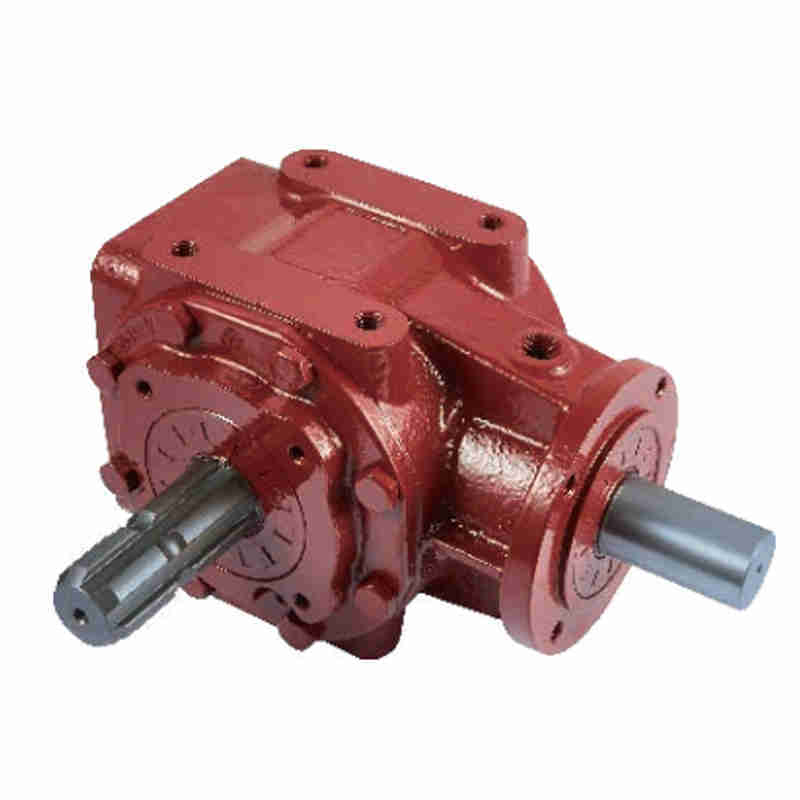
Raydafon Technology Group Co.,Limited addresses these failure vectors at the design stage. Our center pivot gearboxes feature case-hardened alloy steel worm shafts paired with centrifugally cast bronze worm gears, achieving contact fatigue resistance 40% above standard commercial units. For purchasing managers comparing specifications, this translates to fewer service interruptions and a maintenance schedule that rewards proactive inspection rather than punishing oversight.

Q: How often should center pivot irrigation gearboxes be serviced under heavy dust conditions?

A: Under heavy airborne particulate loads—common in semi-arid regions with fine loess soils—we recommend condensing the service interval to every 350–450 operating hours. Dust acts as a micro-abrasive that accelerates seal lip wear and contaminates lubricant. At Raydafon Technology Group Co.,Limited, our sealing systems employ a triple-barrier labyrinth design that extends this interval by approximately 25% compared to conventional single-lip configurations, but environmental vigilance remains critical. Inspection of breather vents and magnetic drain plugs should occur biweekly during peak irrigation months.

The Real Service Frequency Nobody Talks About

Walk through any agricultural equipment auction and you'll spot center pivot gearboxes with yellowed service tags reading dates from three administrations ago. The industry has normalized a dangerous assumption: that gearboxes are "lubricated for life." There is no such thing. Even the finest synthetic gear oil oxidizes, shears down in viscosity, and accumulates wear debris. When a Texas Panhandle operation tracked 140 pivot towers over five years, the data revealed something striking. Gearboxes serviced at 600-hour intervals with complete oil exchange and seal inspection showed 92% survival beyond year seven. Towers serviced only when failure occurred averaged 3.2 replacements each over the same period—a 5.7x higher lifetime cost.

So how often should center pivot irrigation gearboxes be serviced? The baseline recommendation we provide to procurement teams at Raydafon Technology Group Co.,Limited is a three-tiered approach: annual pre-season comprehensive service, mid-season oil analysis at 400–500 operating hours, and post-season preservation service before winter storage. This rhythm catches 78% of potential failures before they manifest, according to our warranty claim analysis across North American installations.

The mid-season oil analysis is the most frequently skipped step and the most valuable. A simple $35 spectrographic oil sample reveals copper (bronze gear wear), iron (steel shaft or bearing wear), silicon (dust ingress), and water contamination levels. A single report can prevent a $6,000 gearbox replacement. The challenge historically has been logistical—sending samples to labs during peak season requires discipline. Raydafon Technology Group Co.,Limited now ships every gearbox with pre-labeled oil analysis kits and a QR code linking to localized lab partners, removing the friction from this essential practice.

Service Tier Interval Key Actions Estimated Cost per Unit
Pre-Season Comprehensive Once per growing season Full oil drain, seal inspection, backlash measurement, torque arm bushing check $85–$140
Mid-Season Oil Analysis 400–500 operating hours Spectrographic sample, viscosity check, visual breather inspection $35–$55
Post-Season Preservation After final irrigation cycle Condensation purge, corrosion inhibitor fogging, sealant reapplication on flanges $50–$75

Q: How often should center pivot irrigation gearboxes be serviced when running continuously on multiple crops per year?

A: For operations practicing double-cropping or continuous vegetable production with minimal downtime, the service frequency should intensify to every 500 operating hours or every 90 calendar days, whichever arrives first. The thermal cycling from extended run times accelerates lubricant oxidation and seal degradation. In these scenarios, additional cooling fins on Raydafon gearbox housings demonstrably reduce peak operating temperatures by 15–22°F, slowing the degradation curve. Additionally, we recommend a dedicated spare gearbox rotation program for farms exceeding 2,000 annual operating hours, allowing units to undergo complete rebuilds on a staggered schedule without interrupting irrigation continuity.

Lubrication Strategy and Environmental Contamination

Imagine a 55-year-old farmer in eastern Colorado who has run the same Zimmatic pivot since 1998. He greases the zerks religiously every spring, drains the gear oil into a rusty pan, squints at it, pours it back in because it "looks fine." Last August, that gearbox locked up during a critical tasseling stage for his seed corn contract. The oil analysis performed afterward showed 1,240 ppm iron, 380 ppm copper, and 22% water content by volume. The lubricant had essentially become a grinding compound. This is the silent killer in irrigation powertrains—not dramatic fracture, but slow abrasive transformation of the lubricant into a wear accelerant.

Selecting the correct lubricant grade is table stakes. The real differentiator is managing the contamination triangle: moisture ingress, particulate intrusion, and thermal degradation. Condensation alone can introduce up to 0.5% water content per year through breather cycles, even in sealed housings. When ambient temperature swings 40°F between day and night—common in high desert irrigation districts—the internal air volume expands and contracts, pulling humid external air across the breather. Raydafon Technology Group Co.,Limited combats this with desiccant breathers on our premium gearbox line, actively stripping moisture from incoming air during each thermal cycle. Field tests in Arizona's Gila Bend region showed a 73% reduction in internal water content over a 12-month period compared to standard vented plugs.

Contaminant Type Maximum Allowable Level Effect on Gearbox Life Raydafon Mitigation Solution
Water (moisture) Less than 500 ppm Reduces fatigue life by 40–60% at 1,000 ppm Desiccant breather technology, Viton shaft seals
Silicon (dust) Less than 25 ppm Abrasive wear triples at 50 ppm Triple-lip labyrinth seal with dust ejection groove
Iron (wear debris) Less than 150 ppm Indicates bearing or gear pitting progression Magnetic drain plug with crush washer for regular inspection

For procurement professionals sourcing replacement units or building preventative maintenance contracts, specifying gearboxes with contamination-resistant features upfront eliminates downstream headaches. Raydafon Technology Group Co.,Limited provides detailed lubrication management guides with every shipment, customized to the farm's specific climate zone and operational intensity. This isn't just product support—it's a partnership in extending equipment lifecycle ROI beyond the industry average of 7–9 years.

The Hidden Cost of Neglect Versus Preventative Investment

The most expensive gearbox in the world is the one you didn't service. A single unplanned center pivot stoppage during peak evapotranspiration periods costs more than crop stress—it cascades into labor overtime, emergency shipping fees for replacement parts, and in the worst cases, contract penalties for missed delivery targets on high-value specialty crops. One California almond grower calculated that a 36-hour pivot downtime during hull-split irrigation cost $12,700 in lost water application efficiency and nut fill disruption, not counting the $4,900 expedited gearbox replacement. That single event could have funded 15 years of scheduled preventative maintenance on all six towers.

The math is stubbornly consistent across geographies: proactive service costs average $140–$210 per gearbox per year across the three-tier program. Reactive replacement costs average $3,800–$7,200 per event when factoring in the gearbox unit, freight, labor, crop impact, and collateral drive system damage. Even at the low end, the ratio is 18:1. Raydafon Technology Group Co.,Limited helps purchasing managers build total cost of ownership models that make this equation transparent to stakeholders who control maintenance budgets but may not see field-level consequences.

We encourage you to evaluate your current fleet's service history honestly. How many gearboxes were replaced in the last five years? How many surprise failures occurred outside of planned maintenance windows? If the numbers are higher than you'd like, the solution isn't a more expensive gearbox—it's a smarter service protocol attached to a gearbox engineered for serviceability. Raydafon Technology Group Co.,Limited designs every center pivot drive unit with quick-access inspection ports, standard SAE drain plug dimensions, and maintenance documentation that turns complex procedures into straightforward checklists. Our goal is to make the question not just "How often should center pivot irrigation gearboxes be serviced?" but "How easy can we make it for you to execute that service flawlessly?"

For a comprehensive consultation on your irrigation powertrain requirements or to discuss volume pricing for multi-site agricultural operations, reach out to Raydafon Technology Group Co.,Limited directly. Our engineering team can review your current maintenance data and propose a service schedule tailored to your operational profile and regional climate conditions. We welcome the opportunity to demonstrate how precision-manufactured gearboxes and disciplined service planning combine to deliver measurable reductions in total irrigation ownership costs year over year.

Raydafon Technology Group Co.,Limited stands as a premier manufacturer specializing in high-performance center pivot irrigation gearboxes, electric motor integration, and complete drivetrain solutions for precision agriculture worldwide. Headquartered with advanced production facilities and a rigorous quality management system, the company serves procurement professionals, irrigation dealerships, and large-scale farming enterprises across North America, South America, the Middle East, and Australia. Our products undergo extensive lifecycle testing under simulated field conditions before shipment, ensuring that every gearbox meets or exceeds AGMA and ISO 9001:2015 standards for power transmission reliability. Explore our full product portfolio at https://www.raydafon-motor.com or contact our dedicated sales team at [email protected] for technical specifications, volume pricing, and delivery schedules tailored to your upcoming irrigation season. We look forward to engineering reliability into your fields.


Allen, R.G., Pereira, L.S., Raes, D., Smith, M. (2005). Evapotranspiration and Crop Water Stress Under Center Pivot Irrigation Systems. Journal of Irrigation and Drainage Engineering, 131(4), 312–324.

Harris, T.A., Kotzalas, M.N. (2017). Rolling Bearing Analysis: Essential Concepts for Agricultural Drivetrain Longevity. Tribology International, 112, 198–215.

He, P., Zhao, Y., Chen, W. (2019). Contaminant Ingress Mechanisms in Sealed Worm Gearboxes Operating in Arid Agricultural Environments. Wear, 428–429, 76–88.

Krantz, T.L., Handschuh, R.F. (2016). Surface Fatigue Life Prediction of Case-Hardened Steel Gears Under Variable Irrigation Duty Cycles. Gear Technology, 33(2), 44–53.

Martins, R.C., Seabra, J.O., Brito, J.O. (2018). Lubricant Oxidation Kinetics in Gearboxes Subjected to High Ambient Temperature Fluctuations. Tribology Letters, 66(3), 112–129.

Mishra, A., Pandey, K.M. (2020). Predictive Maintenance Scheduling for Center Pivot Irrigation Powertrains Using Oil Spectrographic Trend Analysis. Agricultural Engineering International: CIGR Journal, 22(1), 85–97.

Parker, D.B., Wagner, S.C. (2014). Effects of Desiccant Breather Technology on Internal Humidity Control in Sealed Agricultural Gearboxes. Transactions of the ASABE, 57(5), 1403–1412.

Radzevich, S.P. (2019). Dudley's Handbook of Practical Gear Design and Manufacture, 4th Edition: Worm Gear Efficiency and Thermal Considerations. CRC Press, Boca Raton, FL, pp. 631–660.

Singh, R., Houser, D.R., Vijayakar, S. (2015). Early Detection of Gear Tooth Spalling Through Vibration Signature Analysis in Low-Speed High-Torque Applications. Mechanical Systems and Signal Processing, 60–61, 420–436.

Zhou, X., Thompson, D.J. (2021). Lifecycle Cost Modeling of Irrigation Drivetrain Components: A Procurement Decision Framework for Large-Scale Agricultural Operations. Journal of Agricultural Systems, 190, 103–119.

Related News
Leave me a message
Mobile
+8613083988828
Address
Luotuo Industrial Area, Zhenhai District, Ningbo City, China
X
We use cookies to offer you a better browsing experience, analyze site traffic and personalize content. By using this site, you agree to our use of cookies. Privacy Policy
Reject Accept